We’ve all heard about the benefits of getting your daily steps in. Ten thousand steps, a walk after lunch, taking the stairs instead of the elevator, an evening loop around the neighborhood. But when it comes to getting in shape, most men eventually ask the same simple question: can ordinary walking actually make a difference?
Can it help burn fat? Does it help preserve muscle? Or is it simply a convenient excuse to spend another hour away from the gym?
The answer is far more interesting than you might think.
Walking won’t turn you into a bodybuilder. But dismissing it as “just a walk” would be a big mistake.
What Happens to Your Body When You Walk?
Walking is so natural that we barely think of it as exercise. In reality, it’s a full-body activity.
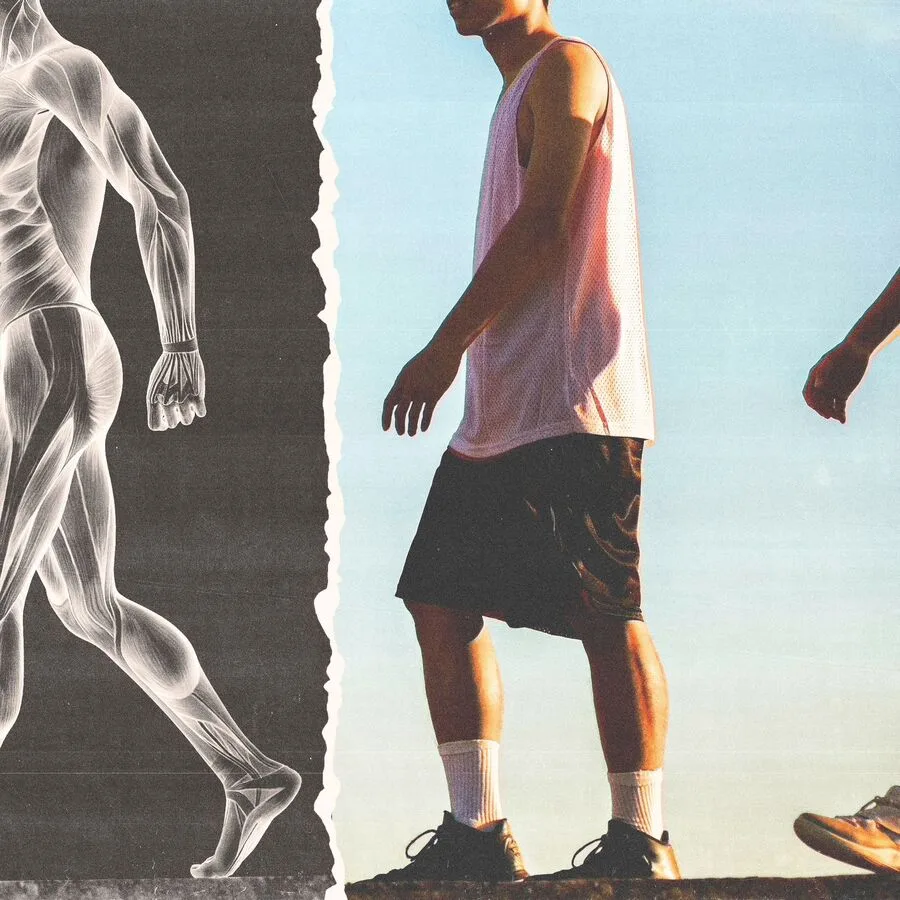
As you walk, the muscles in your legs and core are constantly contracting to support your body, stabilize your pelvis and propel you forward. Your quads, hamstrings, glutes, calves and abdominal muscles all get involved — along with your arms, which help maintain the rhythm of your movement.
The faster you walk, the more energy your body uses. Your breathing speeds up, your heart works harder and your muscles require more oxygen.
Professor Brian Carson, an exercise physiologist at the University of Limerick, puts it simply: walking increases energy expenditure and the metabolic demands placed on your muscles and your body as a whole.
There’s an important caveat, though: walking remains a relatively low-intensity activity. That’s why a normal walk doesn’t leave you gasping for air like a sprint would. But that doesn’t mean your body isn’t working.
And Walking Doesn’t Just Work Your Legs
There’s a reason you often feel mentally sharper after a good walk.
As you walk, your brain is simultaneously controlling your movements and processing information from your surroundings. You’re taking in people, cars, buildings and trees, responding to the surface beneath your feet, and constantly adjusting your pace and direction.
All of this creates a continuous stream of sensory information.
A 2014 Stanford University study found that walking can significantly boost creative thinking. In tests of divergent thinking, creativity was around 81 per cent higher while walking than while sitting.
Walking outdoors produced particularly strong results.
So if you’ve been staring at a blank document for an hour without coming up with an idea, maybe the problem isn’t the idea. Maybe it’s simply time to get up.
Does Walking Really Burn Fat?
Yes. But this is where it’s worth ditching the magical thinking.
Your body is constantly using energy. When you walk, your energy expenditure increases, and your body draws on fuel from several sources, including stored body fat.
Walking is a form of low-intensity cardio, which means your body is likely to use a significant proportion of fat as a fuel source. But that doesn’t mean a 20-minute stroll will automatically erase your belly fat.
What really matters is your overall energy balance.
If you expend more energy throughout the day than you consume through food, your body gradually begins to tap into its stored reserves. Walking can be a very useful tool in that process, particularly because it’s easy to do consistently.
Can You Build Leg Muscle Just by Walking?
Here’s where the answer is less encouraging for anyone looking for a way to replace their workouts.
Regular walking isn’t an effective way to significantly increase muscle mass.
That doesn’t mean it has no effect on your muscles, though.
One telling finding comes from a study in which participants reduced their daily step count to fewer than 1,500 steps. Their lean leg mass decreased significantly, while muscle protein synthesis fell by around 28 per cent — even after they consumed protein.
In other words, your muscles don’t like inactivity.
Walking helps you maintain a baseline level of physical activity and can be an important part of a strategy for preserving muscle. But if your goal is bigger quads, stronger glutes or more developed calves, walking alone won’t cut it.
That’s what the good old gym is for.
Want More Intensity? Add an Incline
Walking has one major advantage: you can increase the intensity without really changing the exercise itself.
Pick up the pace. Find a hill. Increase the incline on the treadmill. Or load up a backpack with some extra weight.
The latter is known as rucking — walking or hiking with a weighted backpack or weight vest.
The extra load forces your legs and core to work harder, raises your heart rate and increases your energy expenditure.
Walking uphill works in much the same way. Your glutes, calves and thigh muscles face considerably more resistance than they do when walking on a flat surface.
Suddenly, your everyday walk starts looking like a pretty respectable workout.
What About Belly Fat?
This is where we need to be particularly honest.
Walking helps you burn calories and can contribute to reducing overall body fat. But you can’t force your body to burn fat specifically from your stomach.
Spot reduction doesn’t exist.
So doing hundreds of crunches after your evening walk won’t make the fat disappear specifically from your abdomen. You need a combination of sensible nutrition, sufficient physical activity and resistance training.
Walking Can Also Help You Deal With Stress
There’s another reason not to underestimate a simple walk.
During relaxed walking, the parasympathetic nervous system becomes more active, while levels of cortisol — the hormone associated with the body’s stress response — may decrease.
That’s why after 30 or 40 minutes outside, you can come home feeling as though your problems have somehow become a little smaller, even though none of them has actually disappeared.
Walking is also associated with positive changes in brain function. A study involving 120 older adults found that regular aerobic exercise, including walking, could increase the volume of the hippocampus and raise levels of BDNF, a factor that supports the growth and functioning of nerve cells.
Speed Matters
Not all steps are created equal.
A leisurely stroll at “window-shopping pace” and a brisk walk that gets your heart rate up are two very different forms of exercise.
According to Carson, faster walking is associated with better health outcomes, including factors linked to the risk of all-cause mortality and cardiovascular disease.
So if you want to get more from your walking, you don’t necessarily need to push your step count to ridiculous numbers. Sometimes the smarter move is simply to walk faster.
So, Is Walking Actually Worth It?
If you want the short answer: yes.
Walking won’t replace barbell squats, the bench press or high-intensity cardio. It won’t turn you into an athlete in a month, and it won’t reveal your abs if you completely ignore your diet.
But its biggest strength lies elsewhere: walking is so simple that it’s incredibly easy to make it part of your life.
You don’t need a gym membership. You don’t need $300 trainers. You don’t need a coach. You don’t even need that familiar “new life starts Monday” burst of motivation.
You just need to walk out the door.
The Ideal Formula: Walking Plus the Gym
The smartest approach is not to ask walking to do a job it wasn’t designed to do.
Want to build muscle? Add strength training.
Want to improve your endurance? Add higher-intensity cardio.
Want to move better and stay mobile for longer? Don’t forget stretching and mobility work.
And let walking be the foundation.
Three simple ingredients — strength, stamina and mobility — work far better together than chasing the next fitness hack.
Because walking isn’t a secret weapon or a magical weight-loss trick.
It’s simply what the human body was built to do.
And if you stop by the gym after your daily walk, your legs certainly won’t complain.