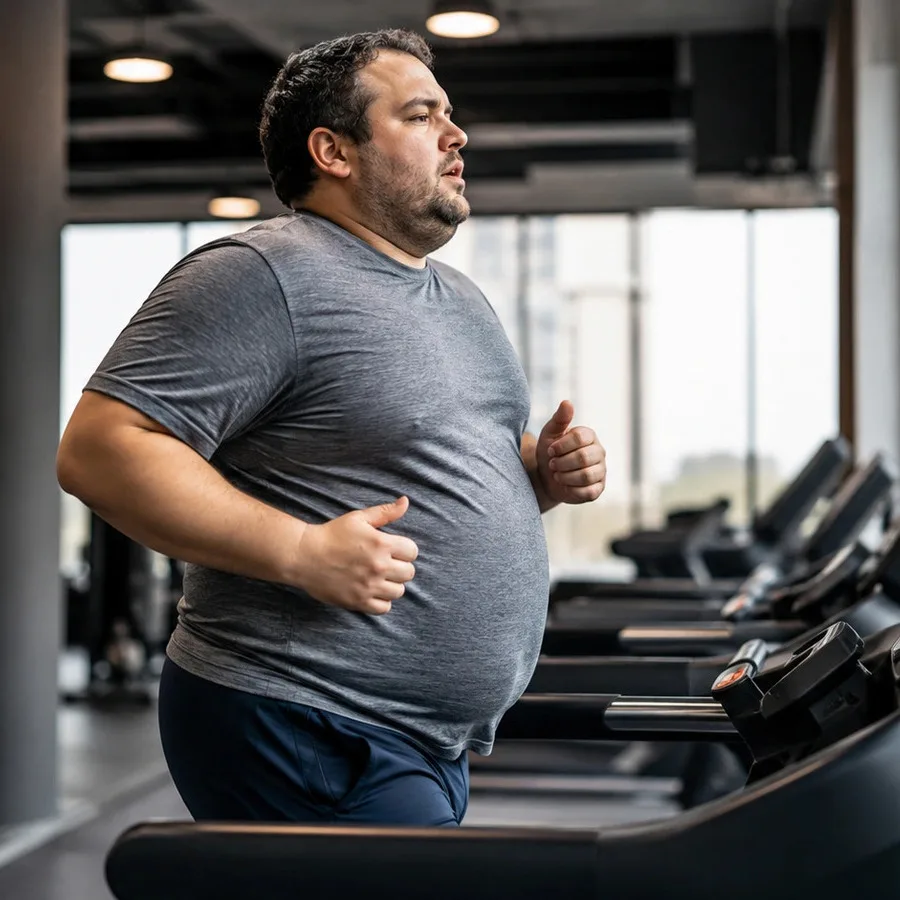
At first glance, the answer seems obvious: fat is burned, converted into energy, and your body becomes leaner. But look a little closer, and things get much more interesting. Your body doesn't make fat evaporate into thin air, turn it into muscle, or send it straight down the drain. In reality, a substantial portion of your stored fat leaves your body through your lungs.
Yes, you literally breathe out part of your excess weight. And that's not a metaphor — it's biochemistry.
You work out, give up late-night snacks, tighten your belt by one notch, and finally, the number on the scale starts going down. But there's one curious detail: where exactly do the pounds you lose actually go?Fat Doesn't Simply Disappear
Let's start with the basics. Your body stores fat not to ruin your vacation photos, but as an energy reserve. When you consume more energy than you use, the excess can be stored in adipose tissue. But when your body consistently uses more energy than it gets from food, it begins drawing on those stored reserves.
At first, your body may use up glycogen more actively. Glycogen is the form in which carbohydrates are stored in your liver and muscles. Some water is lost along with it, which explains why your weight can drop particularly quickly at the beginning of a diet.
When the energy deficit continues, however, fat becomes an important fuel source. It is broken down through a series of chemical reactions. As a result, your body obtains the energy needed to power your muscles, brain, heart, and other systems.
And that raises an interesting question: if your body uses fat as fuel, what happens to its atoms?
They don't simply vanish. They are converted into other substances, primarily carbon dioxide and water.
Your Lungs: The Unexpected Players in Weight Loss
In 2014, researchers Ruben Meerman and Andrew Brown published calculations in the British Medical Journal that helped explain the mass balance involved in fat loss. The conclusion sounds almost like a joke, but it's real science: most of the mass of oxidized fat eventually leaves the body through the lungs.
According to their calculations, of every 10 kilograms of fat lost through metabolic processes, approximately 8.4 kilograms leave the body as carbon dioxide and about 1.6 kilograms as water.
In other words, the main way this mass leaves your body isn't through sweat or a trip to the bathroom. It's through your breath.
Of course, this doesn't mean you can sit on the couch, breathe more deeply, and wait for a six-pack to appear. Meaningful fat loss requires a sustained energy deficit. Breathing simply helps remove the waste products generated when your body uses its fat stores.
So the next time you're jogging, cycling, or walking briskly to work, remember that your lungs do more than supply oxygen. They also help eliminate the byproducts of fat breakdown.
Why Sweating Doesn't Mean You're Burning More Fat
This is where sports-product marketing and popular myths often exploit our desire for quick results.
After an exhausting workout, your T-shirt is soaked, your face is red, and the scale shows one kilogram less. A victory? Don't celebrate just yet.
Rapid weight loss caused by heavy sweating is usually the result of losing water. As soon as you drink fluids and restore your body's water balance, some of those pounds return. That's a normal bodily response, not a failed diet.
Sweating is primarily a way to regulate body temperature. As sweat evaporates from the skin, it helps cool you down. Sweat contains water, salts, and small amounts of other substances, but it isn't the main route through which your body loses fat mass.
That's why saunas, thermal waist belts, and exercising in multiple layers of clothing can't magically melt fat away. They may make you sweat more, but that doesn't mean you're losing more body fat. In fact, excessive sweating increases the risk of dehydration and overheating.
Remember this simple rule: a soaked back doesn't prove that your workout was more effective at burning fat.
Can You Flush Fat Out Through Urine or Your Bowels?
Another widespread myth claims that fat can simply be washed out of your body with special teas, detox programs, or intestinal cleanses.
In reality, body fat doesn't turn directly into urine or feces. When fat is oxidized, carbon dioxide and water are produced. Some of that water leaves the body through urine and sweat, as well as through other normal physiological processes.
Weight loss after taking laxatives or undergoing so-called cleansing procedures is generally associated with losing water and intestinal contents, not with a significant reduction in fat stores.
Detox programs deserve particular caution. Your body already has systems that process and eliminate metabolic waste, including the liver and kidneys. Most commercial “cleanses” lack convincing evidence that they accelerate fat loss, and some may even be harmful.
What If Fat Turns Into Muscle?
This myth is especially popular among people who have just started going to the gym. The idea is simple: lift dumbbells regularly, and eventually your fat will turn into muscle.
That would be convenient, but human physiology doesn't work that way. Fat tissue and muscle tissue are different types of tissue with different structures and functions. Fat cannot directly turn into muscle.
However, it is entirely possible to lose fat and build muscle at the same time, especially if you're new to strength training or returning after a break. Strength exercises, adequate protein intake, a balanced diet, and proper recovery all play important roles.
The scale may not show changes as dramatic as you expected, but your body can still become stronger and its composition can change. That's why it can be useful to track progress not only by weight, but also by waist circumference, strength gains, and how your clothes fit.
So What Actually Helps You Lose Fat?
There's no magic involved. For your body to use more energy than it takes in, you need habits you can maintain for months, not just three days.
Here's what really matters:
- A balanced diet. Choose foods that provide protein, fiber, vitamins, and other essential nutrients. Weight loss generally requires a moderate calorie deficit, not starvation.
- Regular physical activity. Walking, cycling, swimming, and other forms of movement help you use energy and maintain your health.
- Strength training. It helps preserve muscle mass while you lose weight and improves your strength.
- Quality sleep. Lack of sleep can affect your appetite, overall well-being, and ability to stick to your routine.
- Stress management. Chronic stress can make it harder to establish consistent eating and exercise habits.
- Patience. Body weight fluctuates because of water, glycogen stores, intestinal contents, and other factors. Look at the trend over several weeks rather than relying on a single morning weigh-in.
If you have a medical condition or take medication that may affect your weight, it's a good idea to discuss your weight-loss plan with a healthcare professional.
The Bottom Line: Less Magic, More Biology
So, where does the extra weight go? When your body breaks down fat, most of its mass eventually leaves through your lungs as carbon dioxide. The rest is converted mainly into water, which is eliminated through the body's normal physiological processes.
Fat doesn't turn into muscle, disappear through sweat, or get flushed out by a miracle detox tea. It undergoes a complex series of chemical transformations: your body extracts energy, and the resulting metabolic byproducts leave your system.
And if there's one genuinely surprising takeaway from all this, it's simple: you can't order fat to disappear, but you can create the conditions that allow your body to gradually use its stored reserves. Regular exercise, sensible nutrition, adequate sleep, and consistency work far better than any supposed shortcut.
So the next time you go for a walk, feel free to give your lungs a little credit. Just don't try to breathe away those extra pounds through sheer willpower — your body already knows what to do.