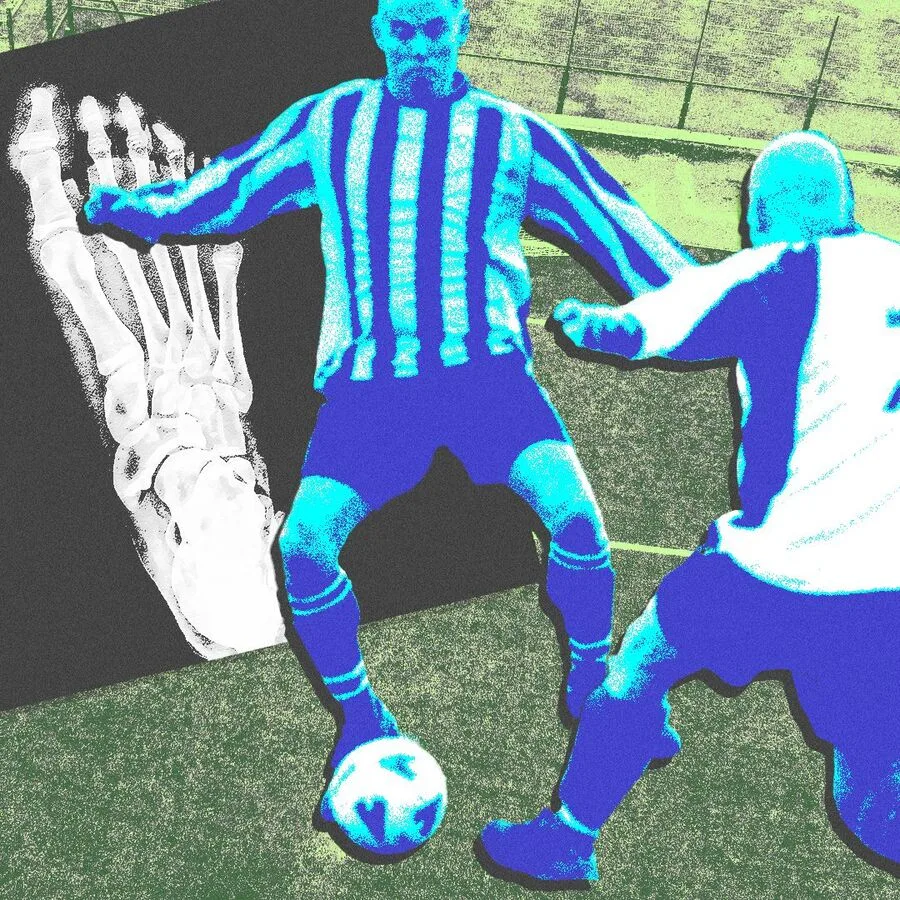
There’s a special kind of male confidence that wakes up on a Sunday morning. You can spend the entire week complaining about being tired, putting off the gym and struggling to climb the stairs, but the moment you see a message in the team group chat — “Lads, we’re playing at 10 today” — something switches on inside you. In your head, you’re already out on the pitch: taking the ball, beating a defender and slotting it into the far corner.
There’s just one problem: nobody told your body about these plans.
At twenty, you could get half a night’s sleep, grab whatever happened to be lying around for breakfast, turn up for a match and run around as if you had three more football careers ahead of you. After 35, the rules change. After 40, they get even stricter. Your muscles are less forgiving of sudden bursts of speed, your tendons don’t always share your ambitions, and your knees can make themselves known even after an awkward turn on the way to grab a coffee.
But that doesn’t mean it’s time to hang up your boots. Playing football at 35, 40 or even 50 can still be a brilliant way to stay fit, catch up with friends and feel part of a team. You just have to start playing for your health as well as against the opposition.
Here are a few rules that can help you stay on the pitch for longer and spend less time getting acquainted with orthopaedic specialists.
1. Don’t spend five days sitting in a chair and then expect your legs to perform miracles
One of the biggest mistakes older amateur footballers make is assuming that a Sunday match, by itself, provides enough physical activity.
Picture a typical week: working at a computer, driving, taking the lift, sitting on the sofa, having dinner. Then suddenly it’s Sunday, you step onto the pitch and start accelerating, braking sharply, changing direction and battling for the ball. To your body, this isn’t a sporting celebration. It’s an unexpected stress test.
The problem isn’t so much your age as the gap between how active you are during the week and the intensity you demand from your body at the weekend.
You don’t have to train every day like a professional footballer. But it’s worth making movement part of your everyday life: walk more, take the stairs, cycle, swim or at least get out for regular walks. Your body needs to get used to being active before you ask it to deliver a football sprint.
2. Don’t try to play at the weight you remember from university
There are men who still keep photos from their university days and genuinely believe they haven’t changed much physically. Sometimes that’s true. But if you’ve quietly gained a few extra kilos over the past decade, the football pitch might be where you get an unpleasant reality check.
Running, jumping and making sharp changes of direction put considerable stress on your joints. Extra body weight increases the pressure on your knees, ankles and other structures that are already working hard during a match.
This isn’t a call to turn yourself into a fitness model overnight or start following a strict diet. It’s about finding a sensible weight at which you can move, run and recover comfortably.
Start with the basics: pay attention to what you eat, your portion sizes, how regularly you have meals and how much you move. You don’t need to punish yourself every time you have a burger. But if you want to keep playing football, your body deserves a little more attention than a Sunday kit and a bottle of water.
3. Running around the block is good, but football requires a different kind of preparation
You can run three kilometres regularly and feel pretty confident about your fitness. But that doesn’t guarantee you’ll get through a football match without problems.
Football isn’t a marathon. You’re constantly changing pace, stopping suddenly, turning, moving sideways, accelerating after a short pause and trying to stay balanced when you come into contact with an opponent.
That’s why ordinary running isn’t enough. Your training should recreate at least some of the movements you perform on the pitch.
Try adding these exercises to your routine:
- short sprints over 10–20 metres;
- running drills that involve controlled deceleration;
- sideways movements and changes of direction;
- single-leg balance exercises;
- squats and lunges;
- exercises to strengthen your core and leg muscles.
There’s no need to jump straight into complicated football training programmes. Start with a small number of repetitions and gradually increase the workload. If you haven’t trained for a long time or have a history of serious injuries, speak to a doctor or physiotherapist before putting together a programme.
4. Warming up isn’t optional just because you’re over forty
Think back to how things used to work. You’d turn up at the pitch, take a few shots, joke around with your teammates and then get straight into the game. Sometimes your first sprint was practically your warm-up.
These days, it’s better not to do that.
Before a match, your body needs time to prepare for intense activity. Start with a brisk walk or an easy jog, then gradually add mobility exercises, short bursts of speed, changes of direction and football drills with the ball.
Exercises that improve balance, landing control and hamstring strength are particularly useful. These muscles and movement skills are essential for footballers who regularly accelerate and brake sharply.
It’s also worth looking at FIFA 11+, a programme specifically designed to help prevent football injuries. It combines running drills, strength work, balance exercises and movement control. The key is to do it regularly, not just before an important match.
One more thing: don’t try to stretch out everything that has tightened up in your body over the years in five minutes. Warm up first, then move gently within a comfortable range. Aggressive, forceful stretching without preparation isn’t the best way to start a Sunday football session.
5. Learn to tell the difference between sporting grit and plain stupidity
This is probably the hardest lesson for men who have been playing football since childhood.
You feel a pain in the back of your thigh, but your team is losing. The manager asks you to stay on for another ten minutes. The lads tell you it’s probably nothing. And you carry on playing because you don’t want to let anyone down.
That’s exactly how a minor injury can turn into a serious one.
Sudden, sharp pain, a popping sensation, noticeable swelling, joint instability or an inability to put weight on your foot normally are warning signs you shouldn’t ignore. Stop playing and seek medical attention. Even if the pain seems manageable, don’t try to judge the severity of the injury yourself.
Remember: missing one match is frustrating. Missing half a season because you decided to play through an injury is much worse.
Real character isn’t always about being able to put up with pain. Sometimes it’s about knowing when to stop.
6. Recover after the match instead of simply collapsing on the sofa
Once the final whistle blows, many players consider their job done. A shower, some food, a few hours in front of the television — and football can wait until next Sunday.
But recovery starts as soon as the physical effort ends.
Give your body time to wind down gradually: walk around for a little while, avoid stopping abruptly and replace the fluids you’ve lost. After that, make sure you eat properly, with enough protein and carbohydrates. Don’t forget about sleep either: it plays an important role in helping your muscles and other tissues recover.
You should also avoid scheduling two intense training sessions back to back just because your cardiovascular fitness allows you to run more often. Your muscles, tendons and ligaments may need more time to recover than you think.
As you get older, the importance of proper recovery often becomes more obvious. So listen to your fatigue, don’t ignore persistent discomfort and leave enough time between intense sessions.
7. Accept that your body is no longer obliged to follow orders from 2008
There’s one thing even the most athletic men find difficult to accept: the fitness you had at twenty isn’t a permanent feature.
Perhaps you used to be able to take several months off training, return to the pitch and get your old speed back after a single match. These days, that kind of experiment could leave you out of action for several weeks.
As you get older, your strength, tissue elasticity, recovery speed and ability to tolerate physical stress can all change. But that doesn’t mean you’re destined for the substitutes’ bench. It simply means your training needs to reflect your current condition, not your memories of the best season of your life.
Don’t be embarrassed about running less, asking to be substituted more often or playing in a position that better suits your abilities. Not every match has to prove that you can still beat a twenty-year-old defender.
Sometimes the best player on the team is the one who knows when to play the right pass.
8. Don’t neglect sleep, alcohol and your habits away from the pitch
You can buy the best boots, warm up properly and train regularly, but you’ll still struggle to recover if the rest of your lifestyle is working against you.
Lack of sleep affects your attention, coordination and your body’s ability to recover. Alcohol after a match can reduce sleep quality and interfere with recovery. Constant stress and irregular eating habits don’t exactly give your body the resources it needs either.
Nobody expects you to turn into a professional athlete with a perfect daily routine. But if you want to keep playing for another ten or twenty years, it’s worth taking an honest look at your habits.
Maybe the problem isn’t that you’re now forty. Maybe you’re simply trying to play football as if you hadn’t spent the previous night getting only five hours of sleep, eating a heavy dinner and having a few drinks with your mates.