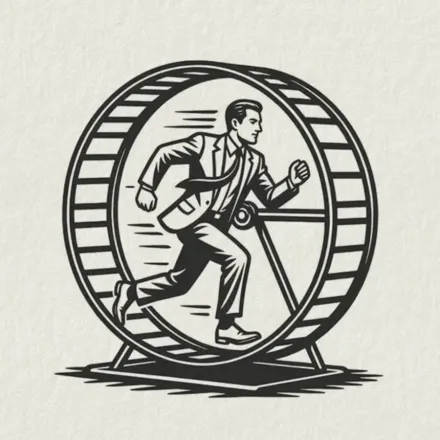
There is a myth that many men still believe.
A true professional never asks for help.
He quietly sits down at his computer, spends ten hours fighting a problem, loses sleep at night, and eventually finds the solution on his own.
It sounds heroic.
But now let’s look at reality.
While you are spending your third day trying to fix an error in Excel or figure out a corporate program, your colleague could probably explain it to you in just three minutes.
And those very three minutes often separate a confident professional from someone who is simply afraid to ask a question.
The truth is, asking for help is not a sign of weakness. Weakness begins when pride prevents you from working effectively.
Choose the Right Moment
Even the most helpful person can react badly if you approach them at the wrong time.
Five minutes before a meeting.
In the middle of an urgent deadline.
When they are already preparing to leave the office.
It is not about you.
Their mind is simply focused on handling their own urgent tasks at that moment.
That is why, before asking a question, take a moment to read the situation.
If you are unsure, ask directly:
«Do you have a few minutes? If now is not a good time, when would be better for me to come by?»
This simple phrase shows respect for someone else’s time.
And that is always appreciated.
Don’t Demand — Ask
Your colleague is not responsible for solving every problem you face.
That is why a polite request sounds much more professional than a demand.
Instead of saying:
«Show me how to do this.»
Say:
«If you have a few minutes, could you help me? If you are busy right now, I can come back later.»
People are much more willing to help when they feel they have a choice.
Paradoxically, giving someone freedom often increases the chance of getting a positive response.
Try to Solve It Yourself First
Nobody likes people who ask for help faster than they search for an answer.
Before approaching a colleague, do your own investigation.
Read the instructions.
Look through the internal knowledge base.
Try several possible solutions.
Then you can say:
«I’ve already checked this, tried these options, but I got stuck at this stage.»
This does not show that you are helpless.
It shows that you are independent.
And that earns respect.
Ask Specific Questions
«Nothing works» is probably the worst way to start a conversation.
What exactly is not working?
Where did the problem appear?
What result were you expecting?
The more specific your question is, the faster someone can help you.
And the more professional you will appear.
Offer Your Own Solution
Even if you are not completely sure what the right answer is, share your idea.
For example:
«I think the problem might be related to access settings. Am I moving in the right direction?»
First, it saves time.
Second, it shows that you are thinking.
And someone who looks for solutions always makes a better impression than someone who simply waits for a ready-made answer.
Don’t Shift Your Work Onto Someone Else
There is a huge difference between:
«Could you explain this to me, please?»
And:
«Can you do this for me?»
A colleague can help you overcome a difficult obstacle.
But they should not complete your work for you.
A true professional takes responsibility back into their own hands after receiving guidance.
Don’t Put Yourself Down
Some people begin every request with phrases like:
«I’m probably just stupid...»
«Sorry, I’m so bad at this...»
«This is probably a really stupid question...»
There is no need for that.
A simple:
«Sorry to bother you.»
is enough.
Then get straight to the point.
Confidence makes a much better impression than constant self-criticism.
Don’t Turn a Colleague Into Your Personal Support Service
If someone helped you once, it does not mean you can message them every twenty minutes from now on.
Professionals appreciate people who learn.
Not those who constantly shift responsibility onto others.
Next time, try to solve the problem yourself first.
You may be surprised by how many things you are already capable of handling without outside help.
Show Your Progress
The greatest reward for someone who helped you is seeing the results.
If their advice helped you successfully complete a project or learn a new tool, let them know.
«Thank you, your advice really helped me. Now I can handle it on my own.»
Words like these are remembered.
And next time, that person will be even more willing to help you.