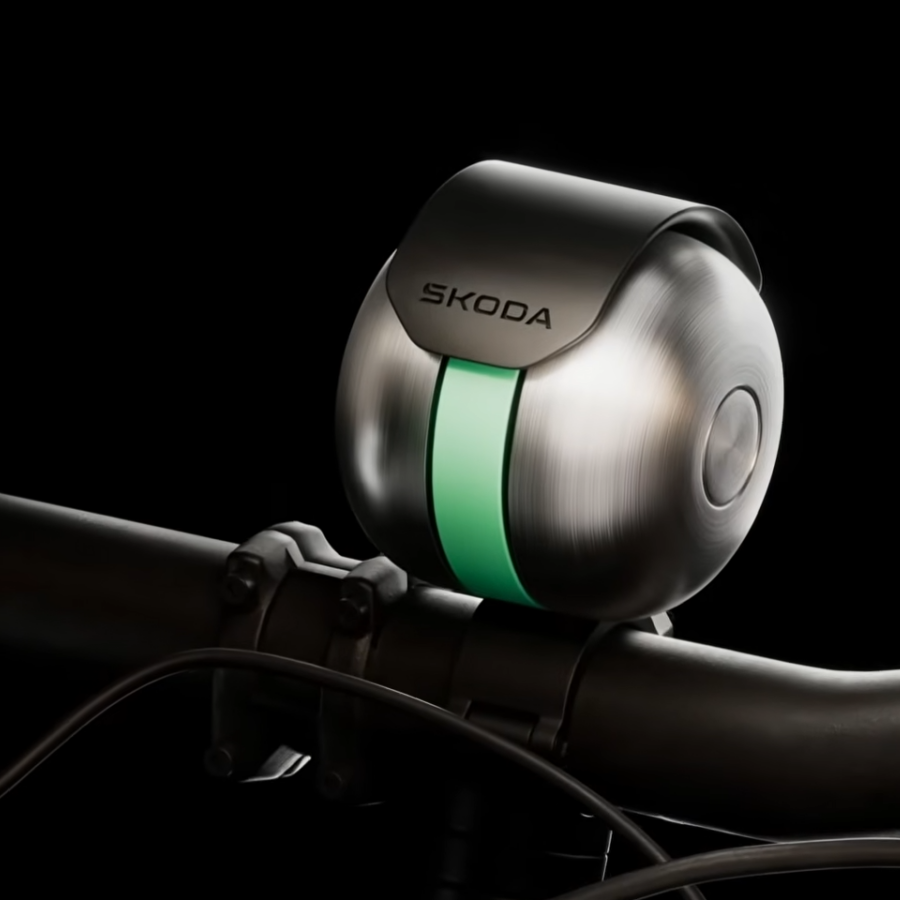
Sometimes the future doesn’t look like a flying car, but like a small bell on a bicycle handlebar. And it sounds loud enough to cut through the “smart” silence of your headphones.
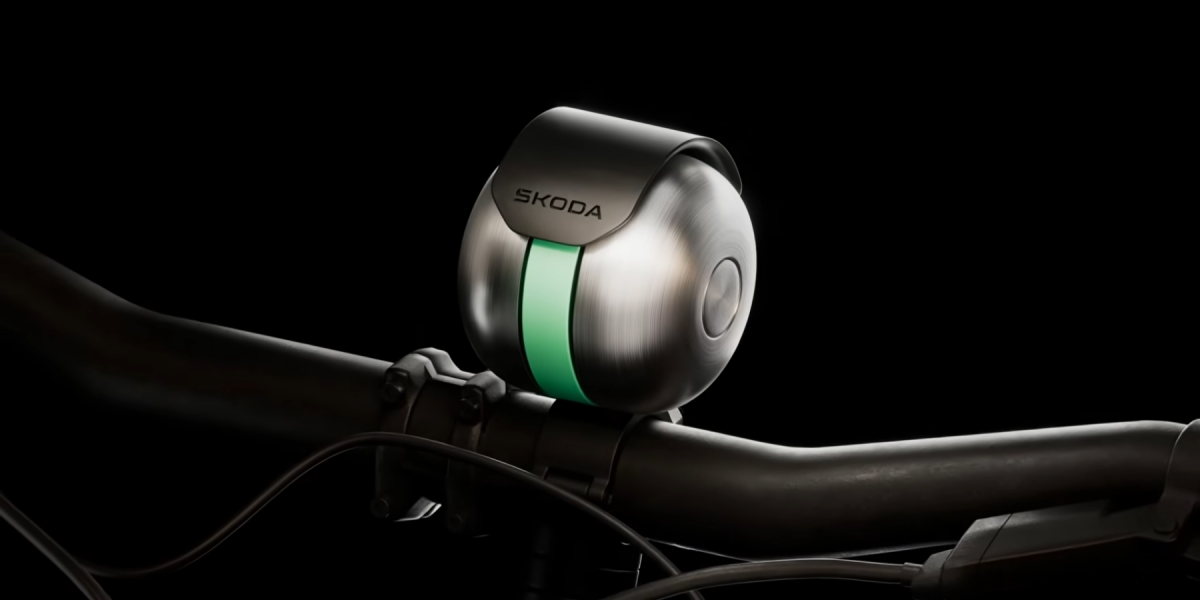
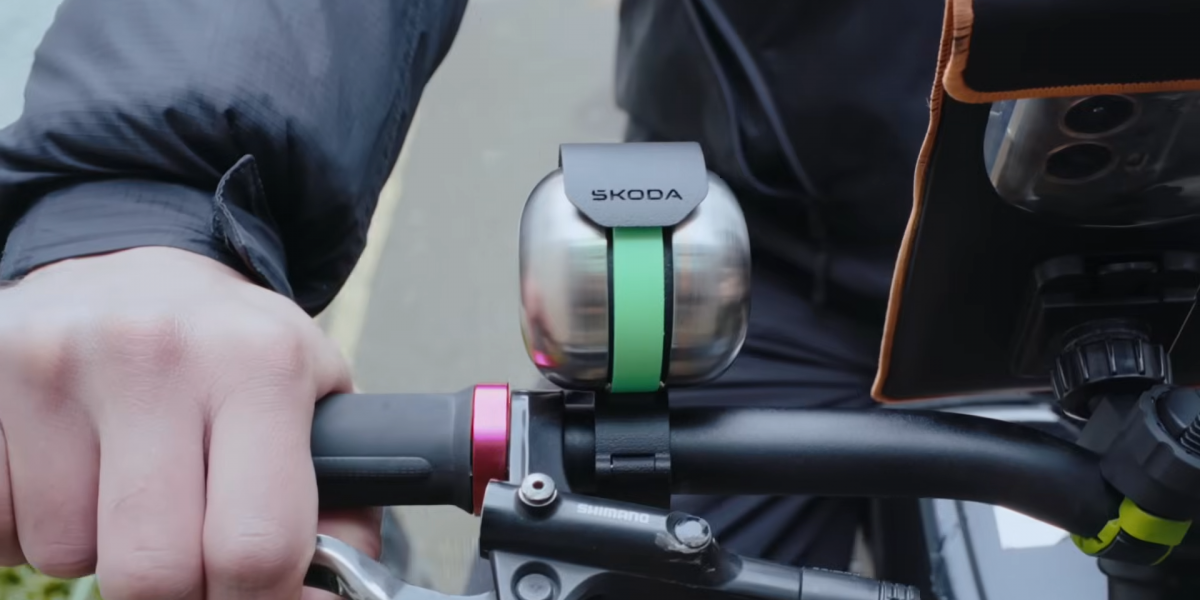
Together with scientists from the University of Salford, Škoda has developed something that seems simple at first glance — the DuoBell bicycle bell. But in reality, it’s no longer just an accessory; it’s a small engineering challenge to modern technology. Its purpose is very specific: to break through active noise cancellation in headphones and reach a person who is physically close, but mentally somewhere inside a playlist or podcast.
And honestly, that’s a very accurate picture of our time.
We live in an era where more and more people walk through cities in a “closed world”, with ANC (active noise cancelling) turned on — cutting out traffic, voices, and urban noise. It’s convenient. It’s pleasant. But it has a side effect: reality starts sounding quieter than the algorithm.
And that’s exactly where DuoBell comes in.
Engineers approached the problem not head-on, but like a puzzle. They discovered that active noise cancellation effectively suppresses most regular, predictable sounds. But it has a weak spot: a narrow frequency range around 750–780 Hz where the system is less reliable.
That’s exactly where the new bell “lands”.
But that wasn’t enough. If a sound is too simple, it can still be predicted and filtered out. That’s why DuoBell uses a second resonator and a “nervous” signal with fast, irregular pulses. In other words, a sound that cannot be modelled in advance — and therefore cannot be cancelled by the algorithm.
And that’s where it gets interesting: for the first time, technology doesn’t just filter the world — it collides with a world that has learned to bypass its filters.
Tests in London with couriers and pedestrians wearing headphones showed a clear result: people reacted to DuoBell on average 22 meters earlier than to a standard bell. In a real urban environment, that’s not just a number — it’s the difference between “made it” and “too late”.
It can be seen as a clever gadget. Or as a sign of a new urban reality where even sound has to be optimized for algorithms.
It’s also worth noting that the bell follows Škoda’s design language: brand colours, materials, and logo. So it’s not just a functional object, but part of a broader design ecosystem and safety philosophy.
But the real question isn’t technical.
It’s human.
DuoBell is not only about cyclists and pedestrians. It’s about how much we’ve learned to disconnect from the world — and how hard the world now has to work to reach us again.
Once, a shout was enough. Now you need the right frequency, unpredictability, and a way to break through digital silence.
The irony is that the better our noise-cancelling technologies become, the more intelligent the signals trying to break through them have to be.
And between these two forces, a new urban ethic is emerging: not just “be careful”, but also “learn to be heard”.