There is a strange rule of the modern internet: the moment a person changes their life, everyone around them immediately demands an explanation.
You lost weight — why?
You gained weight — why?
You look different — what happened?
And if you are a celebrity, the situation becomes even more absurd. Your body suddenly turns into public property, and millions of people feel entitled to discuss it as if they were not talking about a real human being, but about the latest model of a car.
It seems that Lizzo has finally grown tired of playing by those rules.
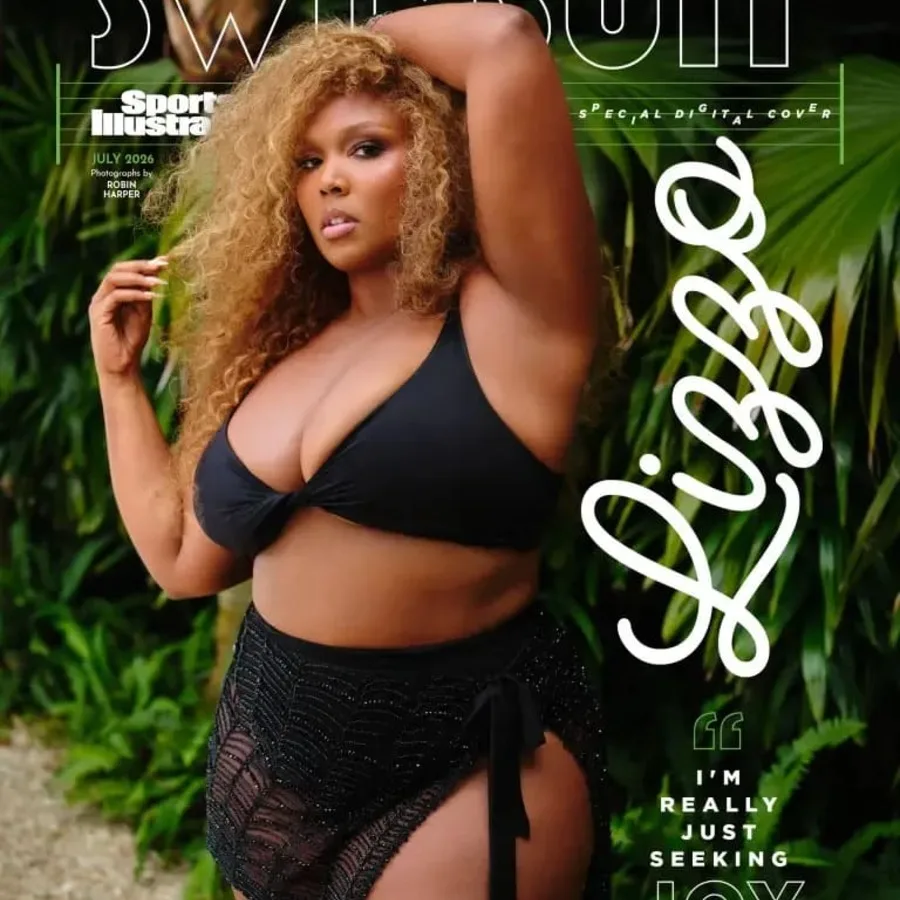
The 38-year-old rapper and singer, who for years has been considered one of the leading icons of the body positivity movement, appears in the latest issue of Sports Illustrated Swimsuit. In the photoshoot, she showed off several striking swimsuits, while in the accompanying interview she spoke about what really happens when a person's body becomes part of their public image.
And this is where the story becomes far more interesting than the usual celebrity piece about a famous woman who lost weight.
Because Lizzo raised a question that concerns not only women and not only the entertainment industry: who decided that we are supposed to look the same for our entire lives just to meet someone else's expectations?
When Your Body Becomes Public Property
As a child, Lizzo says, she could never have imagined that one day a woman with her body type would appear on the cover of one of the world's most famous swimwear and beach-fashion magazines.
And there is something genuinely symbolic about that.
Until fairly recently, fashion magazines promoted almost exactly the same ideal: a tall figure, certain proportions, as little excess weight as possible, and maximum visual "perfection."
Today, the situation is changing. Major publications feature women with completely different body types. The fashion world is slowly learning to show not one universal version of beauty, but many different possibilities.
Lizzo has become one of the most recognizable faces of this movement.
But this is precisely where the paradox begins.
When she was heavier, she was criticized for her weight.
When she lost weight, she was criticized for losing it.
When she gained some of the weight back, the internet presumably found yet another reason to discuss her appearance.
The result is almost a perfect scenario in which a celebrity cannot win under any circumstances.
That is why Lizzo is essentially suggesting that it is time to stop playing the game altogether.
You Lost Weight — So Did You Betray Body Positivity?
There is something deeply absurd about this question.
Originally, body positivity was supposed to mean something very simple: a person does not have to hate their own body simply because it does not fit someone else's ideal.
But over time, the public debate surrounding the concept has become far more complicated.
If a plus-size woman loses weight, people may tell her that she has "given up."
If a thin person gains weight, they may be accused of having "let themselves go."
If someone works out, they are told they are too obsessed with their appearance.
If they do not exercise, people say they lack willpower.
In other words, a person can find themselves trapped in a situation where any choice can be declared the wrong one.
Lizzo found herself facing exactly this situation. After losing a significant amount of weight, she received a wave of criticism from people who decided that she supposedly no longer had the right to talk about self-acceptance.
But does accepting yourself really mean signing a lifelong contract to maintain the exact same body shape?
If a person has changed — physically, emotionally, or psychologically — why should they spend the rest of their life matching the version of themselves they were ten years ago?
Perhaps the healthiest form of body positivity is simply recognizing one basic truth: your body belongs to you, not to your audience.
"Keep Being Outraged" — and It May Be the Best Possible Answer
Lizzo responded to the criticism quite directly.
Her position is simple: if you want to keep being outraged, go ahead.
There is a certain freedom in that attitude.
Because a celebrity who tries to please absolutely everyone is doomed to an endless race.
Some people like her when she is fuller.
Others prefer her after she has lost weight.
Some want her to return to her former appearance.
Others believe she should be a role model for millions of people.
And at some point, the question becomes unavoidable: where is Lizzo herself in all of this?
That is why her words about not trying to please everyone sound surprisingly sensible.
Because it is impossible to build a normal life while constantly checking the reactions of everyone around you.
Today, the internet likes the way you look. Tomorrow, it may not.
Today, people praise you for losing weight. A week later, they accuse you of having "betrayed yourself."
If you allow other people's opinions to control every decision you make, one day you may discover that your own life has turned into an endless audition for approval.
The Most Interesting Part: Lizzo Deliberately Gained Weight Again
But this is where the story becomes even more unusual.
According to the singer, after losing weight, she consciously gained around nine kilograms because she wanted to feel "fuller and juicier" again.
And this detail is particularly revealing.
Because society has become accustomed to viewing weight changes in only one direction.
Losing weight is automatically considered a success.
Gaining weight is considered a failure.
But the human body does not have to follow that mathematics.
For one person, a certain weight may feel comfortable. For another, it may be completely different. Some people feel better with an athletic physique. Others prefer softer curves. Some change depending on their age, lifestyle, and how they feel in their own bodies.
And if an adult makes conscious decisions about their own body, perhaps everyone else really should take a step back.
Without comments.
Without advice.
Without yet another "expert opinion" from the internet.
Why Men Should Pay Attention to This Story Too
At first glance, it might seem that Lizzo's story is exclusively a women's issue.
But it isn't.
Men also live under constant pressure when it comes to their appearance.
The expectations are simply different.
You are supposed to be strong.
You are supposed to look athletic.
You should have broad shoulders, developed muscles, a flat stomach, and enough confidence to never show that your appearance might make you feel insecure too.
And if a man starts working on himself, people may immediately tell him that he is "too obsessed with his looks."
If he stops training, they say he has "let himself go."
If he loses weight, people start asking whether he is ill.
If he gains weight, the jokes about the beer belly begin.
It is the same trap.
You are constantly expected to match someone else's idea of what a real man should look like.
And that is precisely why Lizzo's story can be meaningful not only for women.
It reminds us of something fairly simple: your appearance is part of your life, but it is not your entire personality.
Your Body Does Not Have to Be Your Lifelong Project
Modern fitness culture can sometimes create the impression that the human body is an endless renovation project.
There is always something to improve.
A little more muscle.
A little less body fat.
A slightly more perfect set of abs.
A slightly cleaner diet.
A few more steps.
A few fewer calories.
And before you know it, you are no longer living in your body. You are constantly managing it like a project that can never be completed.
Lizzo offers a different idea.
You can change.
You can lose weight.
You can gain weight.
You can work out or decide to change your habits.
You can look in the mirror one day and realize that you like the current version of yourself more than the previous one.
And then, a few years later, you can change your mind.
And that is okay too.
The Greatest Luxury Is No Longer Having to Explain Yourself
There is a particular kind of freedom that comes with age.
Little by little, you realize that you do not have to explain every decision you make.
Why you ended a relationship.
Why you never got married.
Why you changed jobs.
Why you no longer go to that particular bar.
Why you started working out.
Why you stopped.
Why you lost weight.
Why you gained weight.
Why you enjoy living the life you have chosen.
Of course, health is a separate issue. If changes in weight are connected to an illness or potentially dangerous methods, they require professional attention. But when we are talking about an adult who makes conscious decisions about themselves, the right to decide what happens to their own body should remain with them.
Lizzo seems to have arrived at this conclusion in a rather radical way.
She has gone from being a symbol of body positivity to becoming someone who was criticized for losing weight and then criticized again for gaining some of it back.
And at some point, you can simply decide to stop participating in the competition.
Let the Internet Say Whatever It Wants
Perhaps this is the real message behind the entire story.
You will never be able to please everyone.
It is impossible to be simultaneously thin enough and curvy enough, masculine enough and sensitive enough, successful enough while never making anyone else jealous.
There will always be someone who does not like you.
And that is not a tragedy.
The tragedy begins when, in trying to please that person, you start disliking yourself.
Lizzo can be fuller.
She can be slimmer.
She can change her body again.
She can walk onto a stage, pose for a magazine, put on a swimsuit, and continue living the way she believes is right for her.
And perhaps there is far more body positivity in that than in trying to preserve one specific clothing size forever.
Because true self-acceptance does not mean that you eventually become perfect.
It means you stop believing that you have to be perfect in the first place.
And if the internet gets outraged again, so be it.
After all, it is your body.
Your life.
And perhaps the most sensible thing you can do with both is finally start enjoying them, instead of endlessly trying to meet everyone else's expectations.