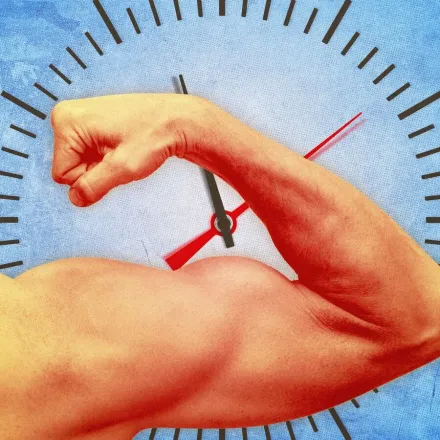
Most men try to optimize their mornings. Some wake up at sunrise, some go running, some take cold showers, drink lemon water and convince themselves that today, finally, they will become the best version of themselves.
And then evening arrives.
And somehow all that discipline disappears.
A late dinner, work messages, several hours in front of a screen, a random snack, one more episode, alcohol “to relax” — and sleep begins when your body has been asking you to shut down for hours.
The problem is that evening can have a huge impact on your long-term health.
The good news? You don’t need an army of biohacking gadgets, ten supplements or a monk-like schedule. Experts are increasingly emphasizing a different principle: longevity isn’t built on a perfect routine, but on habits you can maintain for years.
The Golden Rule: Don’t Try to Do Everything
The perfect evening routine looks great on paper.
A workout, healthy dinner, meditation, reading, stretching, a digital detox, a cold bath, an early bedtime — if you try to do all of this every day, you can quickly become exhausted just thinking about living a healthy lifestyle.
It’s much smarter to choose a few things that genuinely fit into your life.
For example, keeping a consistent bedtime, eating a decent dinner and spending half an hour away from work before getting into bed can do more for you than a complicated ritual you’ll manage to follow for a maximum of one week.
When it comes to longevity, the winner isn’t the person who does everything perfectly, but the one who does enough — and does it consistently.
Start With Your Muscles, Not the Latest Life Hack
If your goal is to stay strong not only at 30 but also at 50, 60 and 70, muscle matters.
Strength training combined with cardiovascular exercise is associated with a significantly lower risk of premature death. The logic is simple: it’s better to build up your physical reserves while your body still responds easily to exercise.
Building muscle is easier when you’re younger. As the years go by, it becomes harder, while maintaining strength becomes increasingly important.
That’s why working out in the evening isn’t a problem in itself.
If it’s more convenient for you to run, lift weights or do any other form of physical activity after work, go for it. Moderate evening exercise can even have a positive effect on sleep quality.
There’s just one rule: if possible, finish intense exercise about an hour and a half before going to bed.
But if the choice is between exercising later and doing nothing at all, it’s better to work out than to wait for the perfect time.
Dinner: Give Your Body Time to Do Its Job
One of the simplest changes you can make to your evening routine is to avoid going to bed immediately after eating.
Ideally, leave around three hours between dinner and bedtime.
But timing isn’t the only thing that matters.
What’s on your plate matters just as much. A dinner rich in vegetables, fiber and quality protein is generally a better choice than a heavy meal packed with ultra-processed foods right before bed.
There’s another interesting idea, too: it may be better to consume a larger share of your daily calories earlier in the day rather than saving your biggest meal for late evening.
If you have breakfast at nine in the morning, it makes sense to finish your eating window at around nine in the evening.
You don’t need to turn this into a religion. But the less your dinner resembles a midnight feast, the easier it is for your body to switch into rest mode.
Sleep Loves Routine
There’s something the modern man tends to underestimate: the body loves predictability.
Going to bed at roughly the same time every day and waking up at roughly the same time is far more important than finding some magical hour that supposedly guarantees longevity.
Studies involving large groups of people suggest that falling asleep between 10 and 11 p.m. may be associated with a lower risk of cardiovascular problems. But the key point isn’t the exact number on the clock.
Your schedule should allow you to consistently get around seven to nine hours of sleep.
If you regularly go to bed at one in the morning and are already standing under the shower at seven, the problem won’t be solved by a miracle pillow or an expensive sleep mask.
The best time to sleep is the one you can stick to consistently.
The Last Hour Before Bed Shouldn’t Be a Second Work Shift
If you’re lying in bed answering work messages, your brain isn’t receiving the signal: “The day is over.”
That’s why it’s worth turning the final hour before bed into a kind of buffer zone.
Dim the lights. Put work emails aside. Lower the brightness of your screens. Change into comfortable clothes. Read a physical book, listen to a calming podcast or do a few gentle stretches.
You don’t need to meditate in the lotus position for forty minutes.
The point is a simple transition: work mode is over; recovery begins now.
Alcohol Isn’t a “Sleep” Button
Maybe a drink in the evening really does help you relax faster.
But relaxation and quality sleep are not the same thing.
Alcohol can disrupt sleep architecture and make overnight recovery less effective. So using it regularly as a way to fall asleep is far from the best strategy.
The same goes for caffeine during the second half of the day, especially if you’re sensitive to its effects.
Your evening shouldn’t force your brain to shut down. It should gradually bring it down to a lower gear.
A Cold Bath Before Bed? Not So Fast
Cold plunges have become almost a cult ritual among biohacking enthusiasts. But for now, the enthusiasm surrounding them is running ahead of the amount of convincing evidence for their long-term benefits.
And you definitely shouldn’t schedule an ice-cold plunge immediately before going to bed.
Sudden cold activates the body: levels of substances associated with alertness and the stress response increase, while your body tries to warm itself back up. That’s not exactly the ideal combination for falling asleep.
If you want to use cold exposure, it’s better to leave several hours between it and bedtime.
Before bed, warmth paradoxically works better.
A warm shower or bath about an hour and a half before bedtime can help your body cool down more quickly afterward. That natural drop in body temperature is one of the signals that helps the body transition into sleep.
One More Detail for Those Who Lift
If you take strength training seriously, don’t rush into an ice bath immediately after the gym.
Some evidence suggests that cold-water immersion immediately after resistance training may interfere with certain processes involved in muscle adaptation and protein synthesis.
In other words, you’ve just given your muscles the signal “get stronger” and then immediately created conditions that may partially slow down that response.
If you like cold exposure, save it for another time. You don’t have to do everything at once.
Your Best Evening Routine May Look Incredibly Boring
And that’s great news.
You don’t need to turn every evening into a longevity experiment.
A good routine can be extremely simple:
- have dinner reasonably early;
- give your body enough time to digest your food;
- move or work out if it fits your schedule;
- put work matters aside at least an hour before bed;
- reduce the brightness of the lights and the amount of screen time;
- have a short, repeatable bedtime ritual;
- go to bed and wake up at roughly the same time.
It doesn’t sound revolutionary.
And that’s exactly the point.
Longevity doesn’t necessarily come from extreme solutions. To a large extent, it consists of boring things you repeat for years.
Don’t Optimize Your Evening. Make It Sustainable
It’s tempting to turn your health into another project.
Measure every stage of your sleep, count every calorie, buy new gadgets, search for the perfect time to work out and create a 20-step evening routine.
But your body doesn’t read your Excel spreadsheet.
It needs sleep, movement, proper nutrition, recovery and consistency.
So choose three or four habits that you can realistically follow on most days.
For example: have dinner a few hours before bed, work out several times a week, turn off the work chat in the evening and go to bed at roughly the same time.
It doesn’t look like the secret to immortality.
But that’s exactly what a strategy with a chance of working for decades looks like.
Your evening doesn’t have to be perfect. It just needs to leave you with enough energy to get back in the game tomorrow.