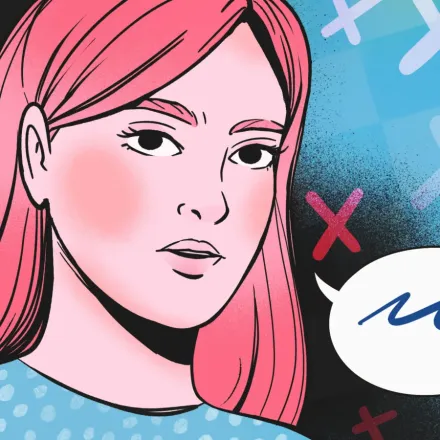
Men aren’t afraid of the dark. They aren’t afraid of the boss. They aren’t afraid of deadlines. But there’s one fear that almost nobody talks about out loud — the fear of failing in bed.
Missed erection. Not hard enough. Too fast. Too slow. “What if I can’t perform?”
A sexologist explains: it’s often not about the body. It’s about the mind. And it has a fancy name — the anxious anticipation of sexual failure syndrome.
What is it?
It’s a state in which a man starts worrying even before sex begins:
- “What if it doesn’t get hard?”
- “What if I finish too quickly?”
- “What if she’s disappointed?”
As a result, the brain switches to hyper-control mode. You don’t enjoy the moment — you check yourself:
- How’s the erection?
- Am I lasting long enough?
- Does everything look normal?
And here’s the paradox: the more you control, the worse it works.
Why is this more common for men?
Research shows sexual anxiety is more common in men than in women. And it can happen at any age — at 25, at 45.
Why?
Because male sexuality in our culture is all about “results.”
You’re supposed to:
- be ready anytime,
- last a certain amount of time,
- bring her to orgasm,
- not fail.
And if something goes wrong, internal criticism kicks in:
“I’m not a real man.”
This is where the vicious cycle begins.
How anxiety blocks arousal
The mechanism is simple.
Arousal is an automatic process. It works when you’re relaxed and tuned in to the sensations.
But anxiety puts everything into “emergency mode.”
The brain thinks: “Danger!”
The body switches from pleasure to control.
You stop feeling your partner.
You start taking a test.
And, frustratingly, the body fails.
The main traps in the male mind
- Hyper-control. Constantly checking the erection.
- Unrealistic standards. Porn is movies. No anxiety, no real-life reactions.
- Catastrophizing. One failure = “something is wrong with me.”
- Self-programming. The more you fear it, the more likely it is to happen.
How to stop being afraid: practical steps
1. Examine your beliefs
Ask yourself honest questions:
Where did the idea that I must be perfect come from?
Who said sex is a competition?
Why do I feel obligated to “deliver results”?
Most of the expectations you place on yourself aren’t really yours. It’s cultural noise.
2. Shift focus from “results” to process
Sex is not an exam.
It’s not a grade.
It’s not a KPI.
It’s connection.
If you aim to “be in the moment” instead of “reach orgasm at all costs,” anxiety decreases.
3. Allow imperfection
Not every sexual encounter has to be 100% perfect.
Not every session ends in fireworks.
Sometimes you can change the format:
penetration → oral → hands → pause → laughter → continue.
Flexibility is maturity, not weakness.
4. Talk to your partner
This is the most underrated tool.
When a man stays silent, he stews in shame.
When he talks, tension decreases.
Often, women take a “failure” much more calmly than you think.
5. Practice calmness outside the bedroom
Anxiety is a skill.
Calmness is also a skill.
Mindfulness, breathing, and paying attention to sensations help your brain avoid switching to “threat mode” during intimacy.
When to see a specialist
If:
- you’ve started avoiding sex,
- every intimate moment is stressful,
- the problem repeats or worsens,
- it’s worth talking to a sexologist.
Sometimes it’s enough to organize your thoughts.
Sometimes therapy is needed.
Sometimes medical support is necessary.
This is not weakness. It’s a mature approach.