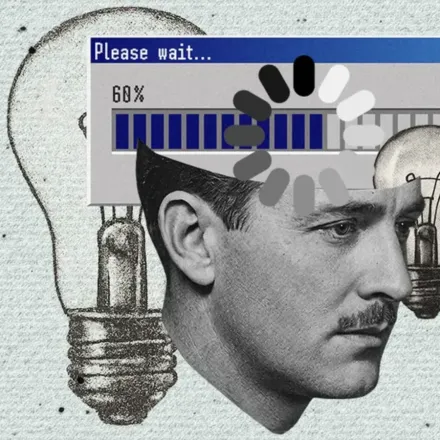
Male strength is often measured by external factors: career, money, physical fitness, status, the number of victories and the ability to take a hit. All of these things genuinely matter. But there is one quality without which even the most successful man can remain a prisoner of his own reactions.
That quality is emotional maturity.
It doesn’t make you cold, emotionless or indifferent. On the contrary — it allows you to feel more without letting every emotion control your life. A mature man can get angry, feel afraid, sad, jealous or disappointed. The difference is that there is a pause between what he feels and what he does.
And it is precisely in that pause that true strength lies.
You Stop Being a Prisoner of Your Own Mood
Anger is not a reason to destroy everything around you. Anxiety is not proof that a situation is catastrophic. Irritation doesn’t necessarily mean that the person in front of you is your enemy.
An emotionally mature man can ask himself: “What exactly am I feeling right now? And why?”
He can distinguish fatigue from indifference, hurt from anger, loneliness from the simple need to spend some time alone. Most importantly, he notices what triggers his reactions.
This gives you a huge advantage. When you understand your inner state, an emotion is no longer an order. It becomes information.
You can feel intense rage without texting your ex at three in the morning. You can receive harsh criticism without quitting your job the next morning. You can be afraid and still do what needs to be done.
You Think About the Consequences, Not Just What You Want
An impulse can sound incredibly convincing: answer harshly, buy something unnecessary, give up on a difficult task, get revenge, prove that you are right.
The problem is that emotions know exactly what they want right now, but they are terrible at predicting what will happen tomorrow.
Emotional maturity teaches you to pause.
Before making a decision, you ask yourself: “Does this really align with my goals? What will the result be in a month? And in a year?”
Sometimes the strongest thing a man can do is simply nothing for a few hours, until his emotions lose their power.
You Stop Looking for Someone to Blame
A mature man doesn’t live by the principle: “Everyone else is to blame, and I’m just a victim of circumstances.”
Your boss may be unfair. Your partner may behave badly. Your friends may let you down. Life may throw situations at you that you never asked for.
But even then, one question remains: what are you going to do now?
You can’t control other people’s decisions, their personalities, the economy, random events or the past. But you can control your own behavior.
That is exactly what changes a man’s perspective: instead of “Why did this happen to me?”, he starts asking, “What can I do now?”
In the first case, you wait for someone to save you. In the second, you start taking action.
You Start Understanding Other People Better
Paradoxically, a man becomes better at reading people when he learns to read himself.
If you don’t understand your own emotions, it is difficult to understand someone else’s. You may mistake fear for weakness, fatigue for indifference, or disagreement for disrespect.
Emotional maturity allows you to look deeper.
You begin to notice not only what people say, but also the reasons behind their behavior. You understand why someone reacts in a certain way, even when you disagree with their point of view.
And this doesn’t apply only to personal relationships. A man with this quality negotiates better, handles difficult conversations, leads teams, resolves conflicts and builds trust.
You Can Support Someone Without Losing Yourself
There is a big difference between compassion and emotional contagion.
If a friend is going through a difficult period, you don’t have to sink into his despair with him. You can be there for him, listen, help and still maintain your own inner stability.
It is one of the most valuable qualities in male friendships and romantic relationships.
You don’t say, “Don’t worry, everything will be fine,” simply to shut down an uncomfortable conversation as quickly as possible. You are capable of sitting with another person’s emotions.
At the same time, compassion doesn’t mean justifying every behavior. You can understand why someone did something wrong and still tell them: “I understand your motives, but that doesn’t make what you did acceptable.”
That is healthy empathy.
Uncertainty Scares You Less
The desire to control everything around you often hides fear.
As long as life goes according to plan, everything seems to be under control. But one unexpected phone call, a career change, a breakup or a financial problem can be enough to make the entire structure start shaking.
An emotionally mature man understands one simple thing: it is impossible to have complete control over your life.
What you can do is develop your ability to adapt.
If Plan A no longer works, you look for Plan B. If circumstances change, you change your strategy. Not because you have given up, but because you are strong enough not to cling to an old scenario simply out of pride.
Flexibility is not weakness. Sometimes it is one of the strongest forms of strength.
You Don’t Turn Failure Into a Verdict on Yourself
One of the most dangerous mistakes is confusing a bad outcome with your own inadequacy.
You failed at a project — that doesn’t mean you are a failure. You were fired — that doesn’t mean you are worthless. A relationship ended — that doesn’t prove you are incapable of being loved.
An emotionally mature man knows how to separate his identity from a specific mistake.
He can honestly say: “I made a mistake.”
But he doesn’t take the next step: “Therefore, there is something wrong with me.”
Instead of destroying himself, he analyzes the situation. What went wrong? What was his responsibility? What can he change? What experience is worth taking with him?
That is why, for him, failure doesn’t become a grave. It becomes training.
You Know How to Say “No” Without Feeling Guilty
Emotional maturity doesn’t show itself only when you have to take a hit. It also appears in everyday communication.
You can turn down a friend if their request conflicts with your plans. You can tell your partner that certain behavior is unacceptable to you. You can end a conversation when the other person crosses a line.
And you don’t need to create a scene to do it.
Healthy boundaries are not aggression. They are a clear understanding of what is your responsibility and what belongs to other people.
A man who doesn’t know how to say “no” gradually builds up resentment. A man who can calmly defend his boundaries without humiliating others preserves both his self-respect and his relationships.