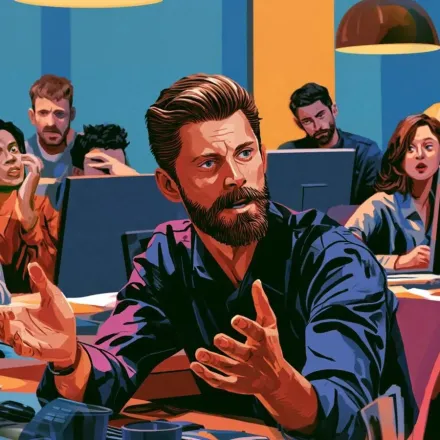
You keep replaying a conversation in your head, even though it won't happen until tomorrow. You analyze a mistake you made three years ago. You put together the perfect workout routine, plan your next career move, or map out a home renovation, but somehow never get around to taking action. Sound familiar?
Maybe you're not particularly responsible or exceptionally forward-thinking. Maybe you simply overthink everything.
The ability to analyze situations is one of the most useful human skills. It helps us make decisions, recognize risks, and learn from our mistakes. But there's a catch: sometimes the brain gets so caught up in thinking that it forgets its main job — helping us live our lives.
Psychologists use the term rumination to describe the habit of repeatedly dwelling on negative thoughts. Overthinking, meanwhile, refers to excessively analyzing potential problems and possible scenarios. Although these mental habits may seem like an attempt to keep life under control, they often drain our energy, undermine our confidence, and make it harder to take action.
Let's look at the three biggest traps people fall into when they spend too much time inside their own heads.
1. Anxiety: You're Living Through Problems That Haven't Even Happened Yet
“What if the negotiations fall apart?” “What if my boss isn't happy with my work?” “What if I make a mistake and everything goes wrong?”
If questions like these regularly run through your mind, you're probably familiar with the habit of worrying excessively about the future.
At first, it all seems perfectly reasonable. You just want to be prepared for every possible scenario. You rehearse your answers, look for weak points in your arguments, and come up with backup plans. Then you create another backup plan because the first one might not work either.
The problem starts when preparation turns into an endless rehearsal for a disaster that may never happen.
Imagine a man who spends several hours the night before an important meeting anticipating every possible question and conflict. He goes to bed with his head full of scenarios, wakes up exhausted, and arrives at the meeting already drained. And the funny thing is, nothing particularly bad may happen at all.
That's the paradox: in trying to avoid stress, you end up creating it yourself before a real problem has even appeared.
What's more, constantly expecting something to go wrong trains your brain to focus almost exclusively on potential threats. Good news, enjoyable moments, and new opportunities get pushed into the background.
What can you do?
Learn to distinguish genuine preparation from anxiety-driven imagination. Ask yourself: “Is there anything concrete I can do right now to improve this situation?”
If the answer is yes, do it. If not, accept that you don't have all the answers yet. Not every problem can be solved in advance, and not every risk requires its own backup plan.
2. Getting Stuck in the Past: You're Replaying a Game That Ended Long Ago
Maybe you still think about that job interview that went badly, an argument with a friend, or the moment you said something you shouldn't have. Or perhaps you keep revisiting a past relationship, trying to figure out exactly when things started falling apart.
It's as if your brain keeps pressing play on an old movie, forcing you to watch the same scenes over and over again. You analyze every word, every tone of voice, your own reactions, and other people's behavior. You convince yourself that just a little more thinking will finally reveal the answer that explains everything.
But often, that answer never comes.
There's a big difference between learning from the past and continuing to live in it. In the first case, you gain experience. In the second, you waste energy on events you can no longer change.
Imagine a man who spends months analyzing every argument after a divorce. He tries to figure out who was at fault, when the intimacy disappeared, and whether the relationship could have been saved. But instead of reaching new conclusions, he sinks deeper and deeper into old resentment.
Maybe there really are things he needs to work on: becoming a better listener, controlling impulsive reactions, or learning not to bottle up his problems. But he doesn't need to revisit the same argument every single night to make those changes.
What can you do?
Try asking yourself three questions:
- What did this experience teach me?
- What can I do differently next time?
- Am I still trying to control something I can no longer change?
If you find an answer, take the lesson on board and allow yourself to move forward. The past can be a great teacher, but it shouldn't become your permanent address.
3. Procrastination: You Spend So Long Preparing for Life That You Forget to Start Living It
This trap is particularly sneaky because, from the outside, it barely looks like a problem.
You're not just lying around on the couch doing nothing. Quite the opposite: you're constantly researching, comparing, reading, planning, and fine-tuning your ideas. Somehow, though, the results never show up.
Want to change jobs? First, you need to research the market, browse job listings, compare salaries, update your résumé, and read reviews of potential employers.
Thinking about getting back into fitness? You need to choose a gym, find the perfect workout plan, buy the right gear, and figure out your nutrition first.
Dreaming of launching your own project? You still need to do a little more research on the competition, check market demand, and wait for the perfect moment.
Weeks turn into months, and sometimes even years. The preparation goes on, but your life doesn't seem to change.
Often, the fear of failure is hiding behind this behavior. As long as you're planning, everything remains perfect in your imagination. But the moment you start taking action, there's a risk of making a mistake, facing criticism, or getting a result that doesn't meet your expectations.
Perfectionism can make things even worse: if you can't do something perfectly, you might as well not do it at all. It sounds convincing, but in practice, it's a brilliant way to never change anything.
What can you do?
Replace the big plan with one small first step.
Instead of “find a new job,” send out one résumé. Instead of “get in shape,” do a short workout today. Instead of “start a business,” test one specific idea with a few potential customers.
Set yourself a simple rule: if you've already thought a task through enough, take the first step within the next 24 hours.
Don't wait for the perfect moment. More often than not, it only shows up after you've started moving.
How to Stop Overthinking: 5 Strategies Worth Trying
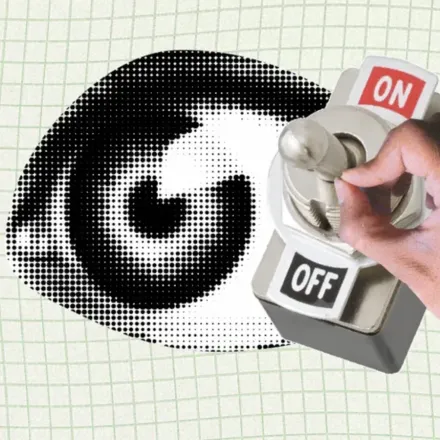
You can't completely switch off your inner dialogue, and you don't need to. The goal isn't to stop thinking altogether. It's to give your thoughts back their proper purpose: helping you take action.
Here are a few simple strategies:
- Set aside time to think. If a problem doesn't need an immediate solution, give yourself 15–20 minutes to think it through. Don't let it take over your entire evening.
- Write your thoughts down. When all your worries are on paper, it's easier to separate real problems from imaginary scenarios.
- Limit your options. You don't need to compare twenty possibilities if three or four are enough to make a sensible decision.
- Reconnect with reality. Going for a walk, working out, cooking dinner, or simply tidying up can help shift your attention away from endless thoughts and toward something concrete.
- Give yourself permission to make mistakes. Not every decision has to be the best one of your life. Sometimes, it's enough for it to be good enough for the situation you're in right now.
If anxious thoughts, a persistently low mood, or repeatedly dwelling on negative experiences become overwhelming and start interfering with your everyday life, consider speaking to a psychologist or doctor. You don't have to deal with a problem on your own when professional support may be needed.
Conclusion: Think Less, Live More
Thinking is useful. Analyzing is necessary. Planning is smart. But when your thoughts turn into an endless series of worries, old mistakes, and postponed decisions, it's time to change the script.
You don't have to anticipate every problem, find the perfect explanation for every failure, or plan every single step of the next ten years.
Sometimes the best decision is to stop replaying a situation in your head and finally do something in the real world.
Because you can spend years getting ready to live a great life. Or you can simply start living it today.