You live in an apartment, order food with a few taps, can contact someone on the other side of the world in less than a minute, and are unlikely to encounter a saber-toothed predator on your way to work.
You might think humanity should have left its primitive fears and behavioral patterns behind a long time ago.
But the brain isn't in a hurry to update its software.
Somewhere deep inside the modern human mind, there is still a creature that remembers: food can run out, a stranger may turn out to be an enemy, and a strange sound in the dark is better checked twice.
That's why you can do completely ordinary things without realizing that they are driven by very ancient survival mechanisms.
And no, that doesn't mean you're secretly dreaming of going back to living in a cave. It simply means that your brain sometimes still behaves as if civilization could disappear by the end of the week.
1. You keep things you should have thrown away ages ago
An old charger. A box from some piece of electronics. A spare part from a device you don't even own anymore. Three identical screwdrivers. A cable whose purpose you can't remember, but for some reason you're convinced you'll need it someday.
Sound familiar?
While cleaning, you pick up some useless object, stare at it for a few seconds and think: “If I throw this away now, I'll need it tomorrow.”
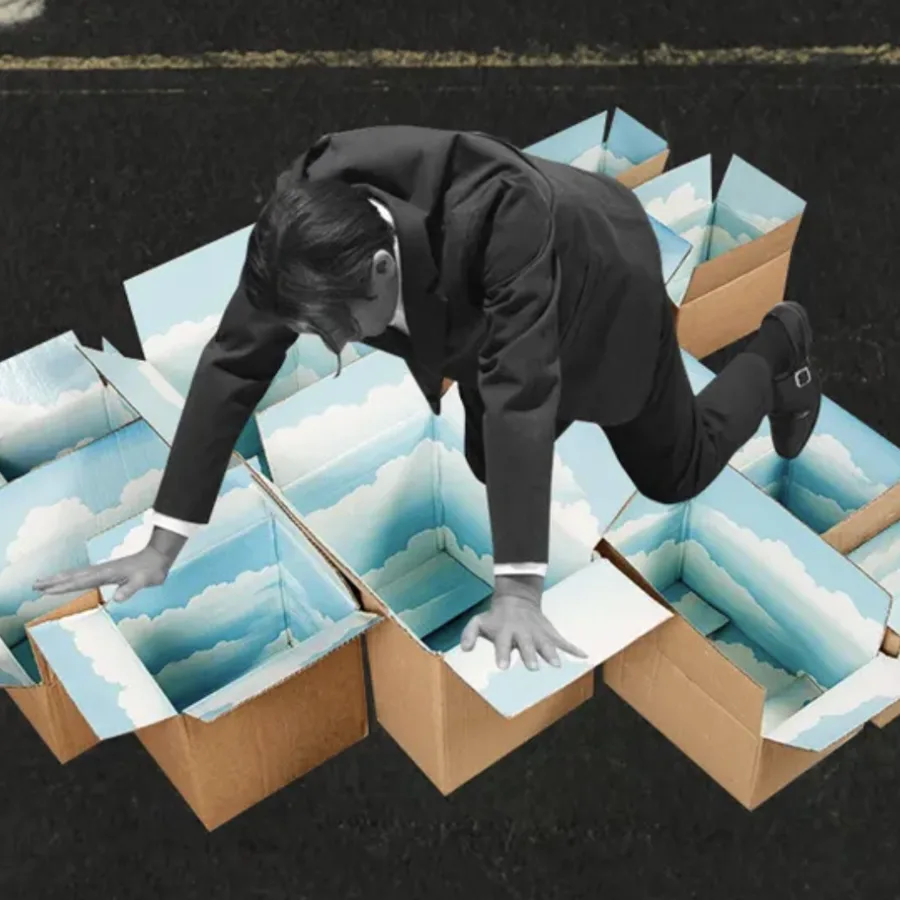
This isn't necessarily pathological hoarding. To some extent, this behavior may be connected to an ancient principle: it's better to preserve a resource than lose it.
For our ancestors, a supply of food, materials or tools could literally determine whether a group would survive a difficult period. Today, supermarkets are open almost around the clock, and a new cable can be ordered in just a few minutes. Yet the brain may still perceive an old object as a potential resource.
So that box full of mysterious wires may be more than just junk. In your mind, it's a small strategic reserve.
That said, if it has already become impossible to open the closet because of it, it's probably time to defeat the caveman living inside you.
2. You check your phone even when there's nothing there
Your phone is silent.
No messages. No calls. No new emails.
You still pick it up.
Unlock it.
Check it.
Put it back down.
Five minutes later, you do it again.
Of course, this may simply be a habit or a dependence on digital stimulation. But there is another, more interesting aspect: the human brain is extremely sensitive to changes in its environment.
Our ancestors had to constantly monitor the space around them. A sound in the bushes, a change in the behavior of another group member, or an unfamiliar silhouette on the horizon could signal danger.
Today, the screen has replaced the bushes.
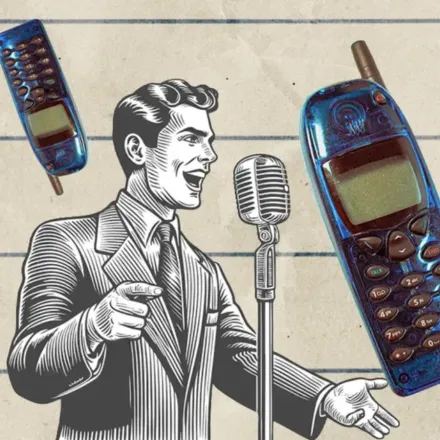
Your phone has become a kind of window into your social environment. Someone has written to you, something has happened, the situation at work has changed, a new story has appeared, or a message has arrived.
You're not simply checking your phone. You're checking whether everything around you is still under control.
3. You talk about other people, even when you call it “just a conversation”
Why do people love discussing other people so much?
Because social information has always been important.
In a small prehistoric group, you needed to know whom you could trust, who was reliable, who was prone to conflict, who might help you and whom it was better to stay away from.
There were no social networks, reviews or databases. But there were conversations around the fire.
“Stay away from him.”
“He's a good hunter.”
“You'd better not trust that guy.”
This was how a primitive system of social navigation developed.
Today, it simply has a different setting.
You might discuss a new colleague with a friend, listen to a story about your boss or be curious about an acquaintance's personal life. Some of this information may be exaggerated, but the brain still uses it to evaluate people.
Who is dangerous? Who is reliable? Who might betray you? Who is worth dealing with?
So gossip may be more than simple curiosity. It can also be a way of navigating a complicated social environment.
But there is an important detail: the fact that this mechanism is ancient doesn't mean modern people should spread every story they hear. The brain may be searching for information as a survival strategy, but there's no need to destroy someone's reputation for entertainment.
4. You have strange rituals you aren't willing to break
Before an important meeting, you always make coffee in the same cup.
Before a workout, you listen to a particular track.
Before tackling something difficult, you check everything twice.
Or perhaps you have your own little tradition that is difficult to explain logically but that you really don't want to break.
The human brain doesn't like chaos. When the outcome is unpredictable, it looks for at least one small area that it can control.
That's why rituals can be calming.
You can't guarantee that negotiations will go perfectly. You don't know whether you'll win a competition. You can't predict exactly how a trip will turn out.
But you can do the same thing you always do before an important event.
It creates a sense of order.
It's no surprise that similar rituals can be found among professional athletes. Following the same routine before a competition can help reduce tension and focus on the task at hand.
So if you check your documents three times before an important event or always tie your shoelaces in the same order, perhaps your brain is simply trying to tell you: “Relax. We already know what to do.”
5. You avoid eye contact when you sense danger
Direct eye contact can be a sign of confidence. But sometimes it has the opposite effect, making a person feel uncomfortable.
Especially when you're facing your boss, an aggressive stranger or someone whose behavior you can't predict.
Among primates, prolonged direct eye contact often has social significance. It can be perceived as a challenge, a display of strength or an attempt to establish dominance.
That's why looking away can be a way of reducing tension.
In modern society, of course, this doesn't mean that every boss is subconsciously perceived as a predator or that a workplace meeting resembles a confrontation between two tribes.
But the brain still evaluates social risks.
You may feel tense before giving a presentation, entering a new group or interacting with someone who has a higher social status. Your body may then choose the strategy: it's better not to provoke conflict.
Interestingly, as you gradually become accustomed to the situation, the need to avoid eye contact usually decreases. Your brain receives new information: there is no danger, so you can relax.
The survival instinct hasn't disappeared — it has simply changed its outfit
The most interesting thing is that most modern threats look nothing like the dangers our ancestors faced.
You don't need to run from predators. You don't need to defend a campsite from another tribe. You don't need to hunt in order to have dinner.
But your brain continues to scan the world around you.
Only now, instead of footprints on the ground, it analyzes a message from your boss. Instead of a stranger near the campfire, it watches a new colleague. Instead of a stockpile of dried meat, it keeps a box of useless cables in the closet.
The problem is that old mechanisms sometimes operate in an environment they were never designed for.
You may interpret someone's silence as a threat when they're simply tired. You may accumulate things you'll never need. You may check your phone every few minutes even though there is no danger there.
But there is good news.
The same instinct that makes you stay alert also helps you react quickly, notice changes, plan ahead and prepare for difficult situations.
The strength of a modern person isn't the ability to completely eliminate primitive reactions.
Strength lies in knowing when those reactions are actually necessary.
So the next time you open a closet full of old things, check your phone for the third time or suddenly feel a strange sense of anxiety in an unfamiliar group, don't rush to call yourself weird. Somewhere deep inside your brain, your ancient ancestor may simply be doing what he knew best: checking whether everything is still safe.