We Live in an Era Where the Brain Is Weaker Than a Smartphone
A modern man can deadlift, close a deal, start a romance — but he can’t read a long text.
That’s not a joke. That’s a diagnosis.
We’re losing our ability to focus, remember, and simply think.
And it’s not the elderly who are falling apart — it’s the 25-, 35-, 45-year-olds.
Thousands of men complain: “I can’t concentrate,” “I don’t remember anything,” “I can’t read,” “my mind feels foggy.”
But almost none of them ask the main question:
Why?
The Reason Is Simple: Permanent “Connectivity”
Your brain started to deteriorate the moment you decided to stay constantly online.
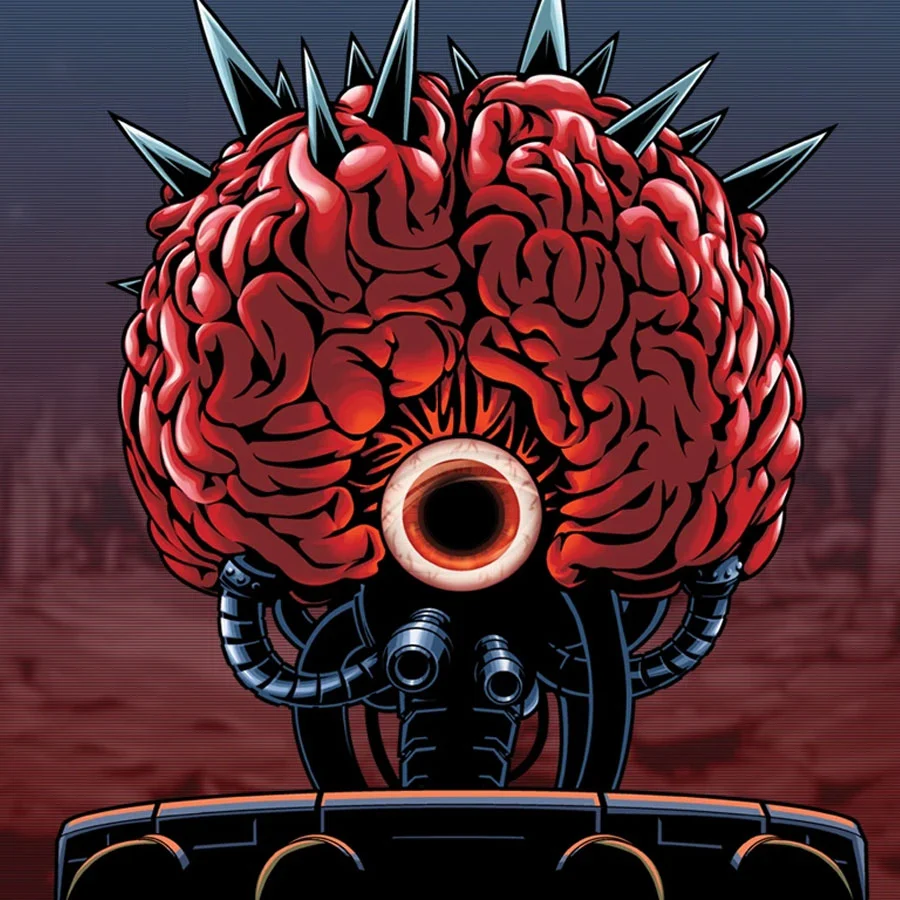
News, notifications, messengers, social media — they’ve turned your mind into an overheated, overloaded burgundy-red processor,
that receives gigabytes of informational trash every single day.
We don’t live our lives anymore — we live inside an endless stream of “content.”
And if information used to be fuel, today it's a drug.
Yes, the internet is a drug. Try it once — and you’re hooked.
You Don’t Read Anymore — You Scan
Researchers have proven: a person who is always online doesn’t actually read.
He just skims, grabbing fragments like a robot.
We read in an “F-pattern”: a few lines at the top, one glance at the middle, then a quick scroll to the end —
just to see how it ends.
That’s why most people can’t read books anymore. Not because they “don’t have time.”
It’s because the brain has forgotten how to hold attention.
You’re automatically searching for “keywords,” conditioned by social media.
You’re physically unable to digest complex sentences, deep ideas, or long paragraphs.
And yes, that’s why long texts trigger whining like “too many words.”
Well… too many words = too few brains.
Mass Stupidity Is Not a Metaphor
Professors, engineers, managers, factory workers — all say the same thing:
after a day online, they can’t open even an interesting book.
The first page feels like torture.
The brain refuses to work — it wants easy, quick, emotional, junk information.
Soon, reading complex texts will become an elite privilege.
Only a few will manage it — like in medieval monasteries, where only those capable of thinking were allowed in.
You’re “Smart” Only Inside Your Phone
Gadgets didn’t make us productive — they made us infantile.
You think you’ve become more informed, but in reality:
you can’t hold a conversation,
you can’t write without mistakes,
you can’t speak without filler words,
you can’t form a coherent thought.
Want the brutal truth?
Your device is smarter than you.
And you’re just a user addicted to your own screen.
How to Stop Your Brain from Falling Apart
Bad news: there are no pills.
No nootropics, vitamins, courses, diets, or “life hacks” will help while you continue pouring informational garbage into your head.
1. Turn Off Your Phone
Not silent mode.
Not airplane mode.
Off.
A real man doesn’t have to be constantly accessible.
Your phone is a tool — not a life-support machine.
2. Cut Down the Information Flow
Eighty percent of what you consume isn’t just useless —
it’s harmful.
Every second of TikToks, memes, and infinite feeds kills your ability to think.
3. Learn to Read Again
Start with half a page a day.
Tomorrow — a full page.
The day after — a page and a half.
Your brain will fight, resist, drag you back to your phone.
That’s normal — you’re going through withdrawal.
You’re reclaiming your ability to be a human, not a scrolling machine.
We Live in a World Where Men Are Destroyed Not by Illness — but by Plain Information Overdose
Your brain is the only tool you can’t replace, buy, update, or reboot.
You either control it — or you hand it over to algorithms.
Ask yourself one question:
Do you control your attention? Or does your phone control you?
Your answer will define who you are — a man with a mind, or another anemic consumer who forgets his own thoughts faster than his feed refreshes.
Actuality: The issue of collapsing attention and memory caused by constant digital consumption is critically important for men today.
Interest: The article exposes real mechanisms of cognitive destruction and shows how to rebuild focus, thinking strength, and mental endurance.
Expertise: Backed by modern research, observations from specialists, and analytical insights.
Outreach: Useful for men aged 20–55 struggling with focus, productivity, and cognitive resilience.