Europe: Peace as a Way of Life
Look at Europe, and it feels almost surreal: life moves at a steady pace. Traffic jams, cozy cafes, historic castles, and football rivalries—this is the reality. No revolutions, no civil wars, no chaos.
Why? Because Europeans have learned to invest in peaceful development. They don’t believe war solves problems. They build institutions, schools, roads, companies, and technologies. Limited natural resources forced Europe to develop trade, industry, and innovation. The result: stability and prosperity.
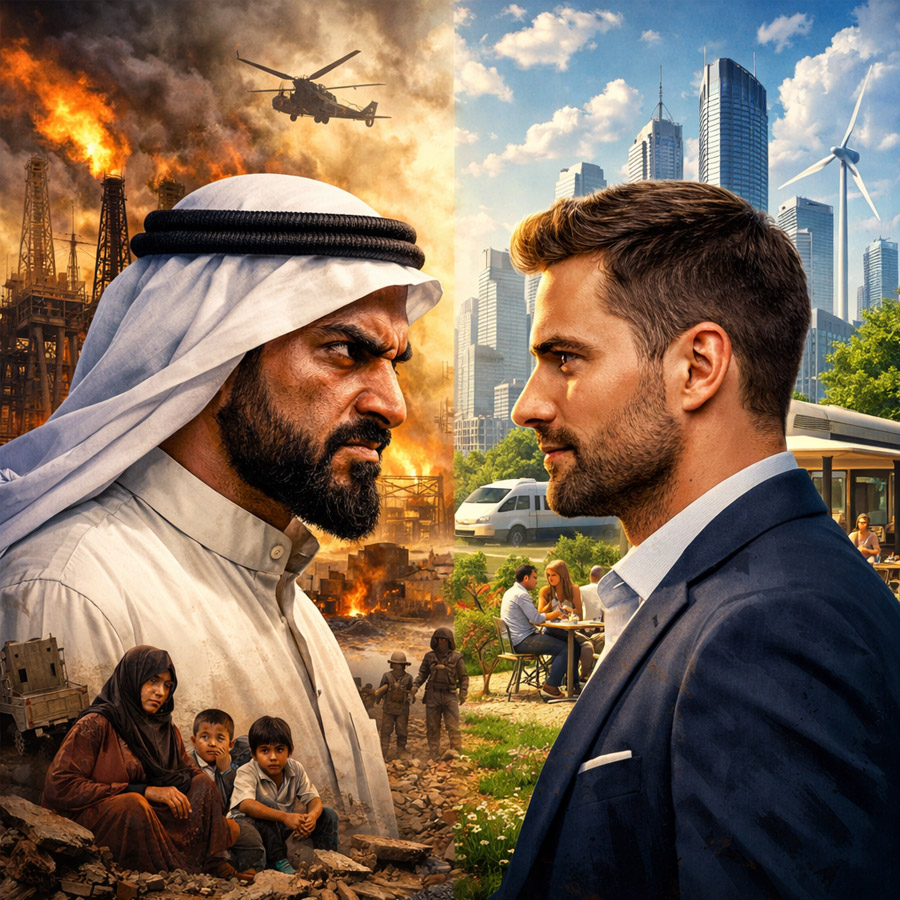
Now look elsewhere. The Middle East, Africa, post-Soviet regions—constant conflict, battles for power and resources, mass poverty alongside elite wealth. Even in oil-rich countries like Libya or Iraq, wealth is concentrated in the hands of the few while the majority face instability.
The Resource Curse: When Oil Kills Progress
There’s a concept called the resource curse. Too much oil, gas, or gold—and a country can turn into a battlefield for elites. Wealth is hoarded, and the population suffers.
Take Nigeria for example. One of Africa’s richest nations in oil and gas, yet most people live in poverty. Corruption and resource conflicts hinder development. Europe, in contrast, learned to create value through technology, education, and commerce because they didn’t have natural resources to rely on.
Experience shows that resources can become a weapon of power, not a guarantee of prosperity. When authority is centralized, resources fund war and control rather than roads, schools, or healthcare.
Power as a Driver of Chaos
The difference between peace and chaos isn’t resources or religion—it’s the structure of power.
Countries with democracy, checks and balances, and a strong civil society resolve conflicts through laws, dialogue, and compromise. Internal wars are rare, and international conflicts are minimized.
In countries with centralized, authoritarian power, resources are spent on maintaining control, external expansion, and military ambitions. Russia, for instance, spends billions on war while it could build a “city of the future,” a second Dubai. Recent decades show that such countries sacrifice public welfare for state ambitions.
History as a Teacher
European nations endured devastating wars and learned hard lessons. They established institutions, international agreements, and cooperation mechanisms to prevent repeating catastrophes. Germany and France, for example, transformed historical animosities into dialogue rather than warfare.
In countries with colonial histories, tribal divisions, and weak state structures, war remains a tool for survival and power. Conflicts are systemic. Afghanistan and Somalia illustrate how the absence of centralized authority turns every resource into a point of local conflict and control.
Religion: Not the Culprit, Just a Mask
Many assume religion is the cause of conflicts in the Arab world or Africa. That’s a misconception. Most conflicts are political, social, or economic, with religion serving as a mask or legitimizing tool.
Migration to Europe can cause cultural friction. People from war zones behave differently—they are adapting to new laws, social norms, and survival strategies. This is often perceived as “bad behavior,” but it’s actually a difference in the rules of the game, not religious aggression. Experience shows that education and integration are the keys to success.
Force vs. Development: The Resource Paradox
Here’s the paradox: countries with abundant resources often choose military solutions, while those with fewer resources invest in education, technology, and infrastructure.
In Europe, investment in technology and education created tech hubs, innovation centers, and world-class universities. Limited natural resources became an advantage, forcing creativity and progress.
The Future of Peace: Lessons to Learn
Today, the world is divided into two types of countries:
- Those that build innovation, social institutions, and stability.
- Those that spend wealth on control, wars, and maintaining power.
To understand the true drivers of conflict, look at power, institutions, and resource management, not religion or culture. Peace and prosperity result from smart distribution of resources, strong institutions, and investment in the future, not just natural wealth.
When deciding where to invest your energy, money, or business, focus on institutional strength and social frameworks, not just oil, gas, or forests. Institutions make a country strong, peaceful, and prosperous, not natural resources alone.
Why does Europe live in peace while other countries do not?
Because of strong institutions, checks and balances, and civil society that allow conflicts to be resolved through dialogue rather than violence.
Why do resource-rich countries often experience chaos?
Due to the resource curse—wealth concentrated in elite hands, corruption, and conflicts over control of resources. Resources become a tool of power, not development.
Is religion the main cause of wars?
No. Most conflicts are political, social, or economic. Religion is often used as a mask or tool for legitimizing actions.
Why does migration cause friction in Europe?
It’s about cultural and social adaptation to new laws and norms, not religion. Education and integration solve these issues.
How can we predict where prosperity or chaos will occur?
By examining power structures, institutions, and investment in development. Resource wealth alone does not guarantee peace or stability.
What makes a country strong and stable?
Strong institutions, fair resource distribution, education, and investment in technology and infrastructure create prosperity and stability, not just oil or gas.