Sometimes it's not painful to watch the world change.
What's painful is watching someone pretend it hasn't.
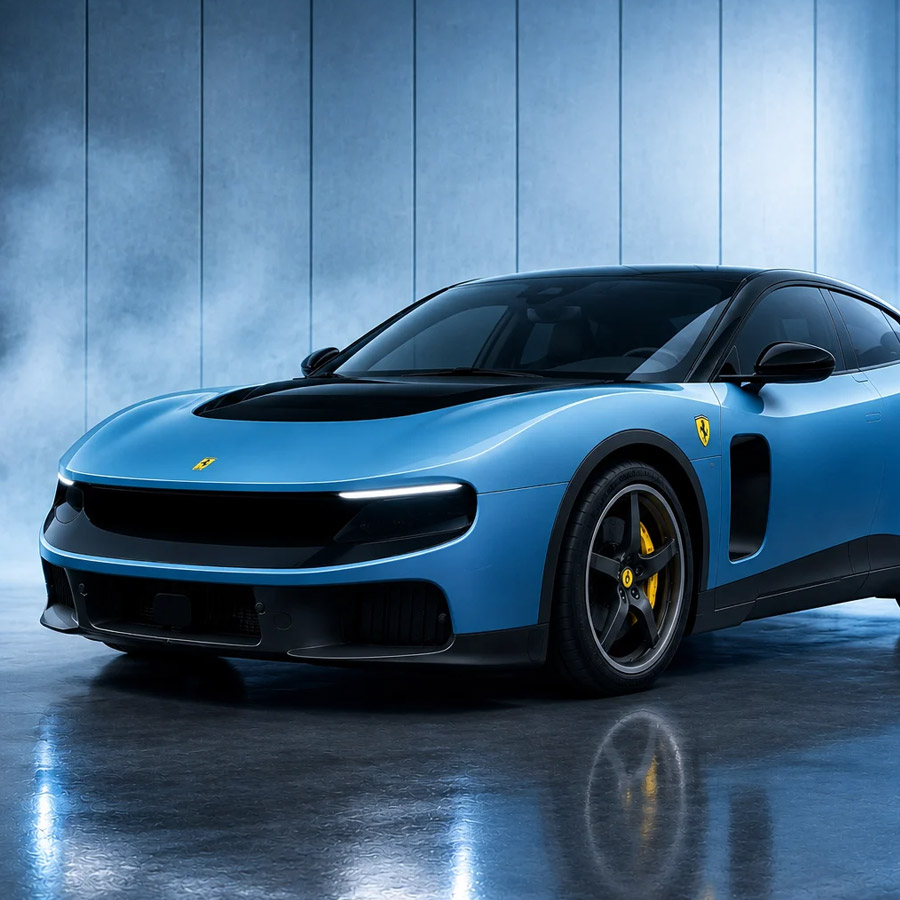
Let's get one thing straight from the start. The problem isn't that Ferrari is building an electric vehicle. The world moves forward. Technology evolves. Transportation has always been a story of progress. Steam engines gave way to internal combustion. Naturally aspirated engines gave way to turbochargers. Now combustion is making room for electrification.
You can be nostalgic for the glorious sound of a V12, the smell of gasoline, and the era when driving a high-performance machine felt like a heroic act. But progress has never asked for permission from romantics.
The real problem is something else entirely.
Ferrari has decided to sell an electric car at a price point where buyers can choose from an entire fleet of cutting-edge Chinese EVs. And a large portion of that fleet will be faster, more advanced, more comfortable, and packed with technology.
You'll find LiDAR, advanced driver-assistance systems, intelligent software ecosystems, semi-autonomous features, premium interiors, next-generation infotainment, and the kind of innovation that would have seemed impossible just a decade ago.
And that leads to a very uncomfortable question.
When a Legend Stops Selling Technology and Starts Selling a Myth
For decades, Ferrari never sold specifications.
It sold a legend.
Customers weren't just buying a car. They were buying the history of Maranello, the legacy of Enzo Ferrari, Formula 1 victories, iconic design, and the unmistakable soundtrack of a Ferrari engine.
Ferrari wasn't just a manufacturer.
It was a mechanical religion.
That's why nobody cared how practical the trunk was, whether the infotainment system was outdated, or why routine maintenance cost as much as a luxury vacation.
But when Ferrari says its new EV is aimed at a younger audience that never grew up dreaming about a V12, everything changes.
Because that audience compares.
And it isn't comparing the new Ferrari to an old Ferrari.
It's comparing it to Denza, Zeekr, Avatr, Yangwang, and a growing list of brands that European manufacturers once dismissed as temporary distractions.
China Is No Longer Catching Up
The biggest mistake many European automakers continue to make is acting as if Chinese manufacturers are still years behind.
They aren't.
First, Chinese brands closed the quality gap.
Then they surpassed much of Europe in software and digital integration.
After that, they began winning the race for innovation speed.
Now they're entering territory that European brands considered untouchable for generations.
The territory of performance, engineering, and speed.
When a four-door electric sedan starts giving established performance brands anxiety, it's no longer a coincidence.
When Chinese manufacturers begin competing for records at the Nürburgring, it's clear they are no longer knocking on the door of the premium club.
They're already sitting inside.
Yesterday's Arguments No Longer Work
There is another argument that appears in almost every automotive debate.
"European cars still drive better."
It sounds convincing.
The problem is that this isn't 1995 anymore.
Today, even ordinary family cars offer handling that would have impressed enthusiasts twenty years ago.
The overwhelming majority of premium car owners will never visit a racetrack.
They won't be trail-braking into corners.
They won't be chasing lap records.
They won't be exploring the engineering limits of their vehicles.
The most demanding challenge most owners face is accelerating away from a traffic light and finding a good parking spot outside a trendy restaurant.
And that's where many legacy brands face a difficult reality.
Because modern electric vehicles often perform that task just as well, if not better.
Europe Is Losing Part of Its Identity
What makes the situation especially troubling is that many European manufacturers seem to be abandoning the very qualities that made them special.
They're losing ground in technology.
They're arguing with the market instead of understanding it.
They're trying to sell heritage as innovation.
And they're asking customers to pay more for it every year.
Look around the industry.
Some brands are desperately trying to reinvent themselves as ultra-luxury icons.
Others have become so obsessed with radical design that their vehicles spark controversy before the wheels even turn.
And some manufacturers have convinced themselves that removing features is a form of design purity.
The problem is that consumers are becoming less emotional and more rational.
Eventually they ask a simple question:
"What exactly am I paying for?"
Why Ferrari Hurts More Than the Others
That is why Ferrari's transformation feels different.
For millions of men around the world, Ferrari was never just a car company.
It was a symbol.
A dream.
A childhood fantasy that somehow survived adulthood.
You can stop believing in fairy tales.
You can take down the posters from your wall.
You can buy a practical SUV and start talking about fuel economy.
But somewhere inside, there's still a kid who saw an F40 for the first time and realized cars could be art.
That's why it's difficult to watch a legendary brand increasingly rely on the power of its logo rather than engineering superiority.
As menscult.net notes, the most dangerous crises don't begin when a company starts losing money. They begin when a company stops noticing that the world around it has already changed.
The Future Doesn't Automatically Buy the Past
Ferrari remains one of the most powerful automotive brands on the planet.
Its history isn't going anywhere.
Its legends will remain legends.
But modern buyers are no longer willing to pay any price simply because a badge carries prestige.
Especially in an era when new competitors offer more technology, more features, and comparable performance for significantly less money.
The biggest question facing Europe today isn't whether it can still build great cars.
It absolutely can.
The real question is whether Europe's iconic manufacturers can build a new business model before the value of the old one finally runs out.
Because if they can't, it won't be the electric car that fails to move forward.
It will be the legend itself.
Answer
Why is Ferrari's electric future controversial? Because Ferrari is attempting to apply traditional luxury-brand pricing to a market increasingly driven by technology, software, and value, where Chinese EV manufacturers are rapidly becoming serious competitors.
Intent
The reader wants to understand why established European automakers are facing growing pressure from Chinese EV brands, how the premium automotive market is changing, and what challenges iconic manufacturers such as Ferrari may face in the electric era.