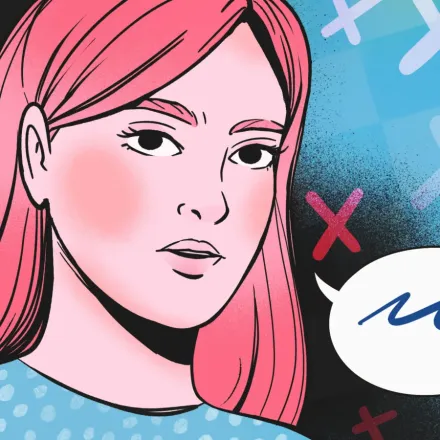
Okay, this sounds like a typical modern loneliness scenario: you have a “conversation partner” in your phone who never ignores you, never argues, and always replies. And yet, paradoxically, this same partner may gradually make you feel even more isolated.
Researchers from the United Kingdom, the United States, Canada, and Australia analyzed over 2,000 people and discovered a rather uncomfortable paradox: the more often people use artificial intelligence for emotional interaction, the stronger their sense of isolation becomes over time. It sounds counterintuitive, but when you break it down — it starts to make sense.
AI as an “ideal conversation partner” that isn’t real
Chatbots like ChatGPT are always available. They don’t get tired, don’t take offense, don’t disappear, and don’t ignore messages. In a world where real communication is often difficult or inconsistent, this feels like a comfortable alternative.
But there is a key difference: AI has no emotions. It doesn’t feel joy, sadness, or attachment. It only simulates conversation.
And the human brain reacts to that.
The trap of “easy contact”
The study revealed a pattern: people who initially felt lonely were more likely to start communicating with chatbots in order to fill that emotional gap.
And then a substitution effect begins.
AI becomes:
— always available
— predictable
— emotionally comfortable
While real conversations become, by contrast, more complex, unpredictable, and sometimes uncomfortable.
And gradually, real-life communication starts losing the “convenience battle.”
Why this doesn’t solve loneliness
The illusion of AI communication is that it feels like there is contact. But in reality, there is no reciprocity.
There is no other person who:
— feels in response
— invests emotionally
— builds a genuine connection with you
This is a one-sided interaction that looks like communication but doesn’t create a deep bond.
Paradox: more conversations — more isolation
The data showed something strange: increased use of AI for communication often doesn’t reduce loneliness — it actually intensifies it.
The reason is simple: simulated interaction temporarily soothes, but does not satisfy the need for real human connection.
It’s like an emotional “food substitute” — it fills you up, but provides no nourishment.
An important note
The researchers emphasize: this is an observational study. It does not prove a direct cause-and-effect relationship.
In other words, we cannot say that AI “creates loneliness.” But it may amplify it if a person is already experiencing it.
Where the main risk lies
The biggest problem is not the technology itself, but substitution.
When AI gradually replaces real human interaction, it creates a habit of “easy contact” — without tension, without risk, without reciprocity.
But real relationships don’t work that way. They are more complex, slower, and sometimes uncomfortable.
And that is exactly what makes them real.