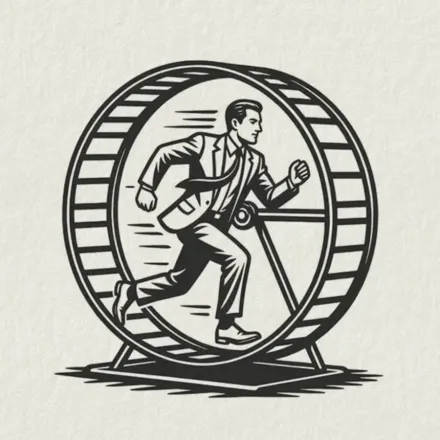
Ambition is a tricky thing. It easily pulls you into a state where you’re already mentally living a life you haven’t earned yet. A new position, money, status, respect — it all feels almost tangible… until you return to reality, where between desire and result lies a long corridor of work, mistakes, and self-discipline.
And this is exactly where most people break. Not because they “aren’t capable,” but because they confuse the energy of inspiration with a real system of action. But if you truly want to turn ambition into results, you have to play by different rules.
Don’t look for motivation — look for the reason that holds you
Motivation is unstable. Today you’re on fire with an idea, tomorrow you don’t even feel like opening your laptop. And if your success depends only on emotions — it’s already lost.
The real anchor is the answer to the question: “Why am I doing this at all?”
And not in the sense of “I want to be successful.” That’s empty noise. Success is not a goal, but a byproduct. The real answer is always deeper: freedom, control over your life, the desire to break out of an environment you’re stuck in, or to prove to yourself that you’re capable of more.
Once you understand this, the need to “wait for inspiration” disappears. You simply keep going.
Skills are a currency, not an option
Ambition without skills is fantasy. Harsh, but true.
Any goal requires a specific set of abilities. And the sooner you accept that, the faster you start moving. And it’s not just about professional skills. Communication, negotiation, handling pressure, learning, and not breaking under criticism are often more important than degrees.
The biggest mistake is ignoring your gaps. Pretending that “it’ll work out anyway.” It won’t. The world doesn’t adjust to your laziness.
And another thing: skills become outdated. What works today may be useless tomorrow. That’s why learning isn’t a phase. It’s a lifestyle.
The plan matters, but reality always rewrites it
The problem with many ambitious people is that they fall in love with their plan.
But reality has not signed any contract with you.
Conditions change, new opportunities appear, old strategies stop working. And if you stubbornly follow a path that is no longer relevant, you’re not showing strength — you’re slowing your own progress.
Flexibility is not weakness. It’s the ability to adapt quickly without losing direction.
The consistent one wins, not the inspired one
There is a dangerous illusion: “when I feel motivated, I’ll make a breakthrough.”
No.
Big results are not built on bursts of energy. They are built on boring, regular, repetitive work.
An example? Emails you send every day. Pages you read even when you don’t feel like it. Small actions that don’t look like “success” but gradually create it.
It’s not the person who sometimes does a lot who wins. It’s the person who does enough — consistently.
Stop being a spectator of your own life
It’s easy to explain failures through external factors: the market, the boss, circumstances, “bad luck.”
But this mindset has a side effect: you lose control.
Once you take responsibility for results, the game changes. You stop waiting for perfect conditions and start working with what you have.
And most importantly, you begin to see the cause-and-effect relationship between your actions and your results. That’s where real players are born, not observers.
Energy is more important than time management
You can perfectly plan your day and still achieve nothing if you have no energy.
Energy is fuel. And if the tank is empty, the schedule doesn’t matter.
Sleep, nutrition, recovery, stress — these are not “extras.” They are the foundation. Also, learning to switch between tasks is crucial. Constant overwork doesn’t make you more productive — it slows you down.
And one underrated factor is meaning. When you understand why you’re doing something, you have more energy. Simply because you’re not wasting it on internal doubt.
Patience is a hidden weapon
The world loves fast success stories. But reality works differently.
Big goals almost never deliver instant results. There is always a phase where you work without seeing change. And that’s exactly where most people quit.
But that “silent zone” is what builds the foundation of future success.
If you keep moving when nothing seems to change — you’re already ahead of those who stop.
Learn from other people’s mistakes too
Mistakes are an expensive way to learn. But there’s a smarter path: observing others’ failures.
Stories of people who have already walked a similar path save you months and years. You’ll find everything there: what worked, what failed, where they lost time, and why.
Using other people’s experience is not a hack. It’s common sense.