There is a moment almost every man knows: you say something calmly and confidently — and suddenly one word breaks the entire sentence. An awkward pause, a smile from the other person, and the classic line appears: “Oh, a Freudian slip.”
And that’s where the magic of interpretation begins. Because suddenly, any speech mistake turns into a “revelation of the soul.” But is it really as dramatic as we like to think?
Where did the idea of “Freudian slips” come from?
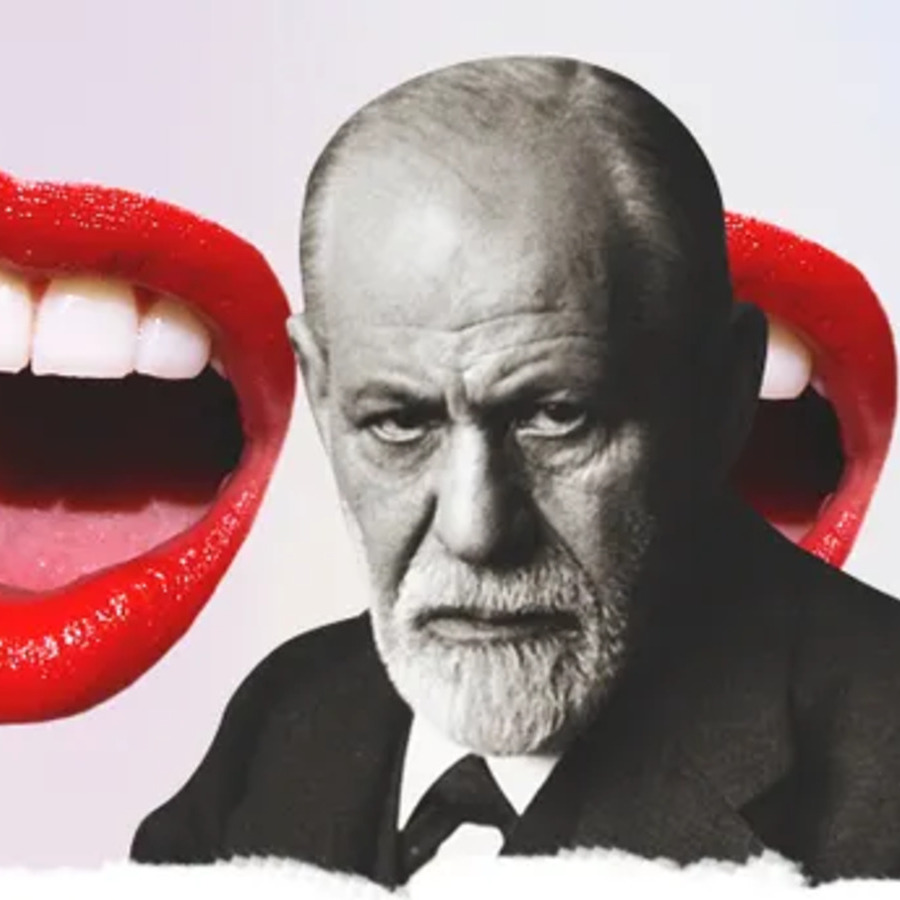
The term comes from Sigmund Freud and his work «The Psychopathology of Everyday Life». He suggested that accidental mistakes are not entirely accidental. According to his logic, slips of the tongue, forgotten names, and mixed-up words can be windows into the unconscious.
In other words: you meant to say one thing, but “actually” said another — and that, according to Freud, is where the truth about you is hiding.
For example:
- a boss says “my income” instead of “our income”;
- a person on a date calls their new partner by their ex’s name.
It sounds almost like a detective story about the human mind.
Why we love explaining everything this way
The idea is seductive: no need for context — just catch someone in a mistake. If they slipped up, they’ve exposed themselves.
The problem is that this makes the human psyche look too simple. As if there is an “inner narrator” inside us who is always honest but occasionally stutters and accidentally tells the truth.
But modern science views it in a much more grounded way.
What research actually says
Psychologists tested Freud’s hypothesis in experiments:
- participants read words;
- stress was induced (threat of electric shock);
- or sexual stimuli were introduced;
- and errors were compared.
Result: the number of errors was similar across all groups. However, sometimes the type of error matched the context.
At first glance, this seems to support Freud. But later studies failed to reliably reproduce these effects.
Conclusion: the brain is not a hidden desire detector, but a system that constructs speech in real time.
Why we actually make slips of the tongue
The modern explanation is much more down-to-earth:
- we speak quickly;
- the brain selects words in parallel;
- similar options get activated;
- sometimes the “wrong” word wins.
Add fatigue, stress, or alcohol, and you get the perfect conditions for a slip.
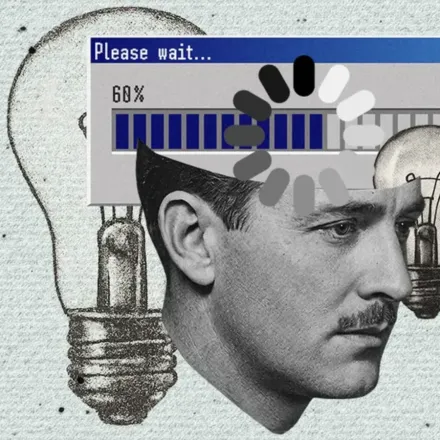
In essence, language works like an imperfect autocomplete system.
Key point: the brain filters us more than we think
Research shows that most “wrong” sentences are filtered out before they are spoken.
Only occasionally does the system fail — not because a hidden truth breaks through, but because the mechanism is not perfect.
Does this mean Freud was wrong?
Not entirely. He was the first to suggest that not everything in our speech is conscious. For his time, it was a revolutionary idea.
Today, the view is simpler:
- sometimes a slip is an association;
- sometimes it’s fatigue;
- sometimes it’s stress;
- sometimes it’s pure coincidence.
And yes, sometimes we simply say the wrong thing without any hidden meaning.
Why you shouldn’t overanalyze
The biggest trap of Freudian interpretation is over-reading other people’s words.
A slip of the tongue doesn’t make someone more honest or “revealed.” It simply means… a speaking error happened.
And if you start searching for hidden meanings in every word, you can easily end up inventing stories that were never there.