There are things that are simply created. And then there are those that become symbols of an entire era. The Hubble Space Telescope belongs to the second category. For more than 30 years, it has looked into the depths of the Universe, showing humanity the birth of stars, distant galaxies, and the beauty of space that was once only possible to imagine.
Now one of the most famous scientific instruments in history has received a new life — in the form of a highly detailed collectible model created by LEGO.
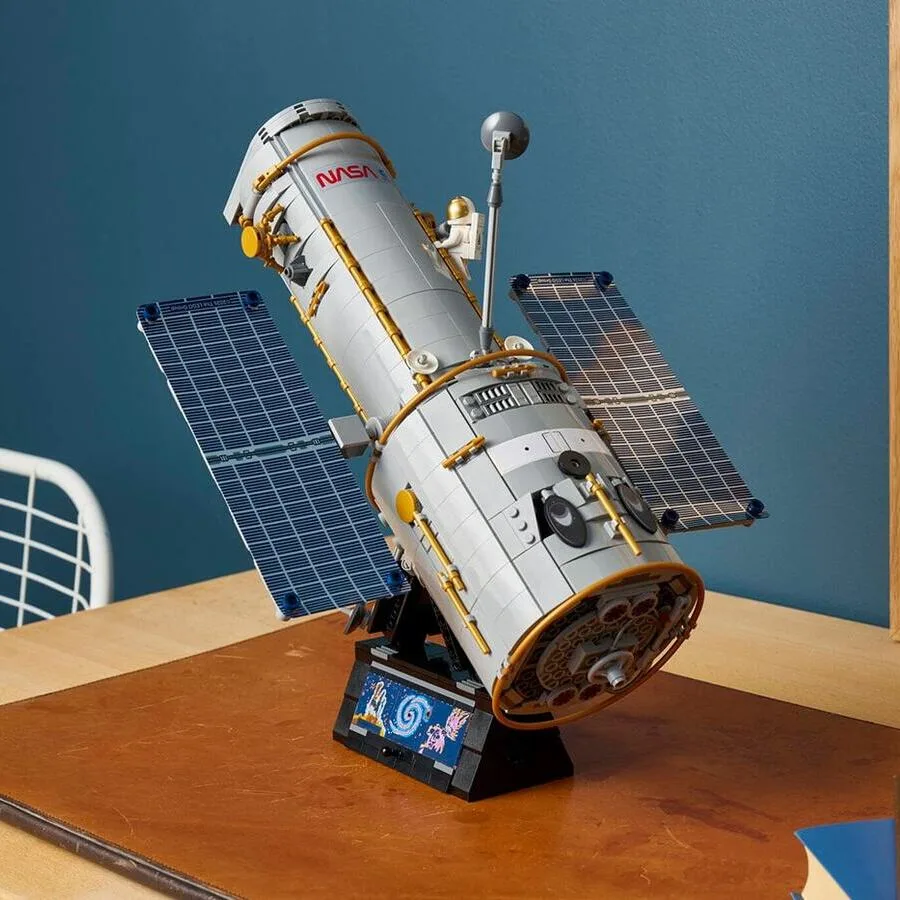
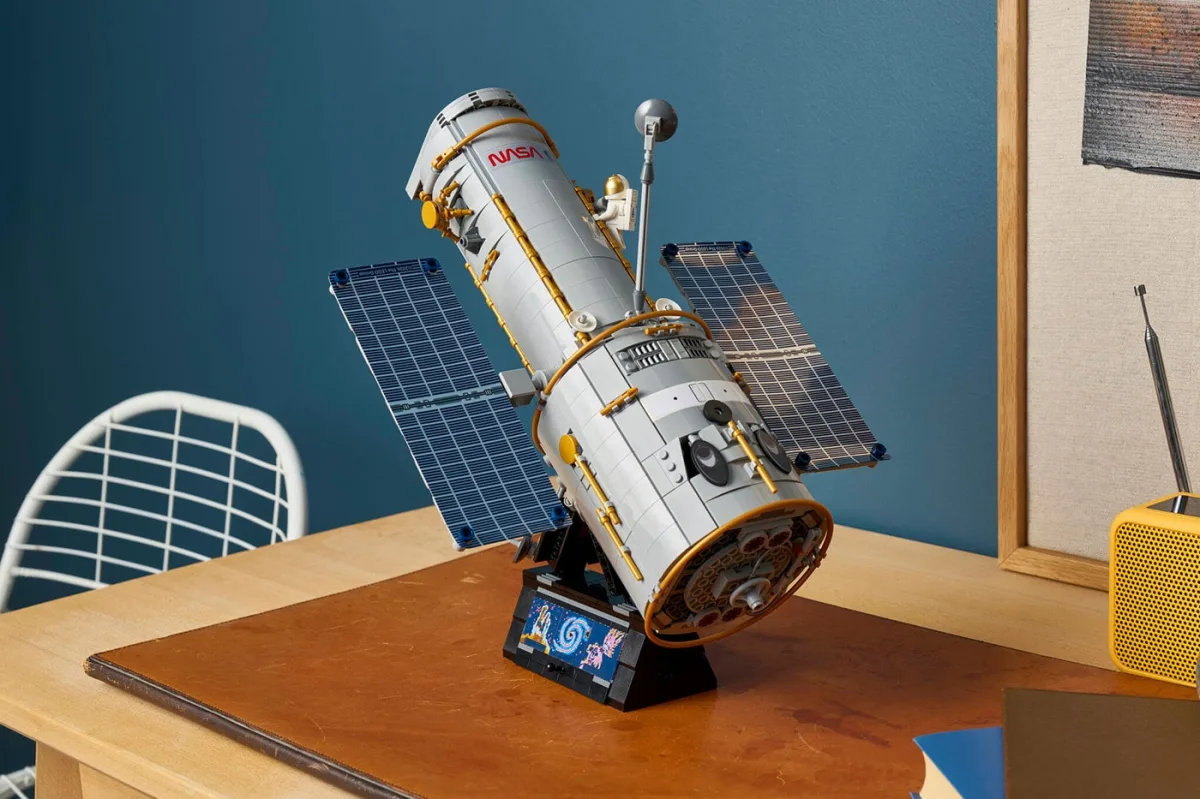
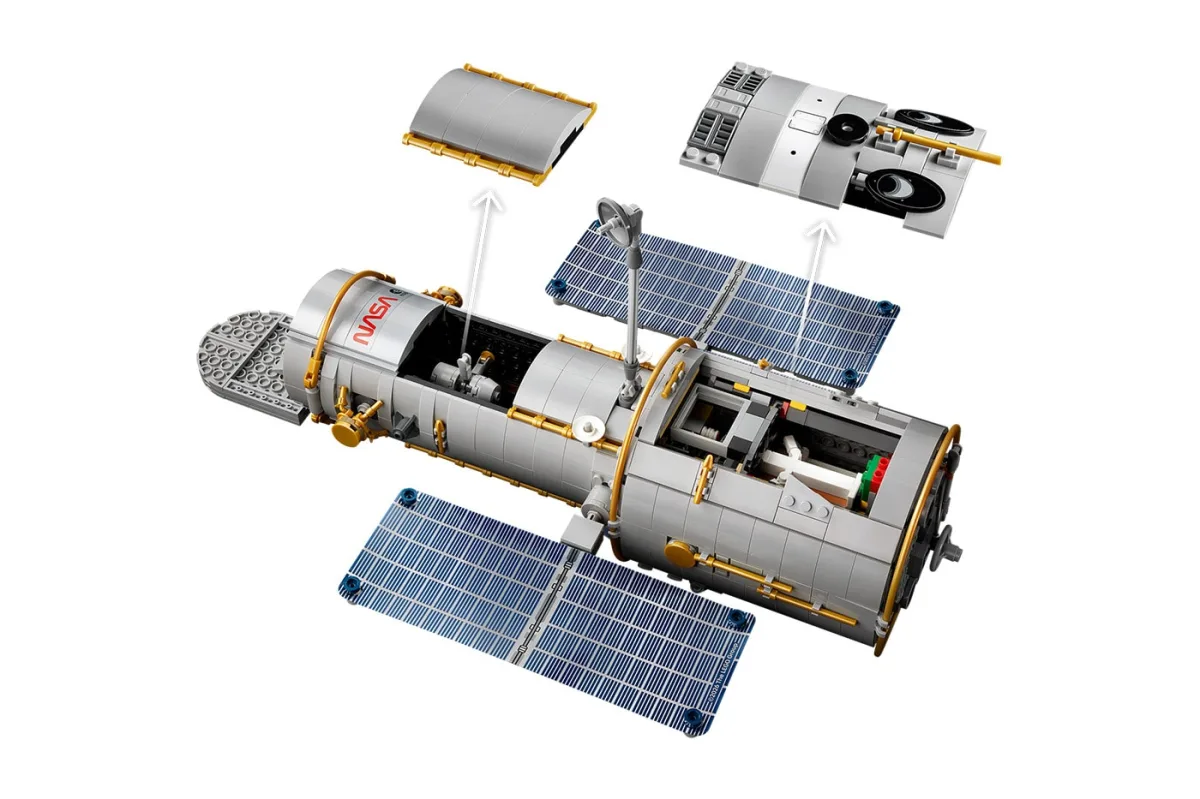
The new model from the LEGO Icons series recreates the Hubble Space Telescope with 1,252 pieces, transforming the legendary orbital observatory into an object that is not only exciting to build but also deserves a place of honor in any room.
The telescope that changed our understanding of the Universe
Hubble was launched into space in April 1990 aboard the Space Shuttle Discovery. Its mission was expected to become a revolution in astronomy — and it did, although its beginning was far from perfect.
After launch, scientists discovered a problem with the telescope’s primary mirror: an optical defect caused the images to appear blurry. The project, which was supposed to become one of NASA’s greatest achievements, was at risk of turning into one of the most expensive mistakes in the history of space exploration.
But humanity did what it does best — it solved the problem.
In 1993, during a special servicing mission, astronauts installed corrective optics, allowing Hubble to finally reveal its true potential.
From that moment on, the telescope became a legend.
Thanks to Hubble, millions of people were able to see the famous “Pillars of Creation,” images of distant galaxies, and incredible nebulae that had previously existed only in astronomy textbooks.
LEGO created not just a model, but a story of space exploration
Most collectible sets simply look beautiful on a shelf. But the LEGO Icons Hubble Space Telescope was designed with a completely different philosophy.
It is a model that tells a story.
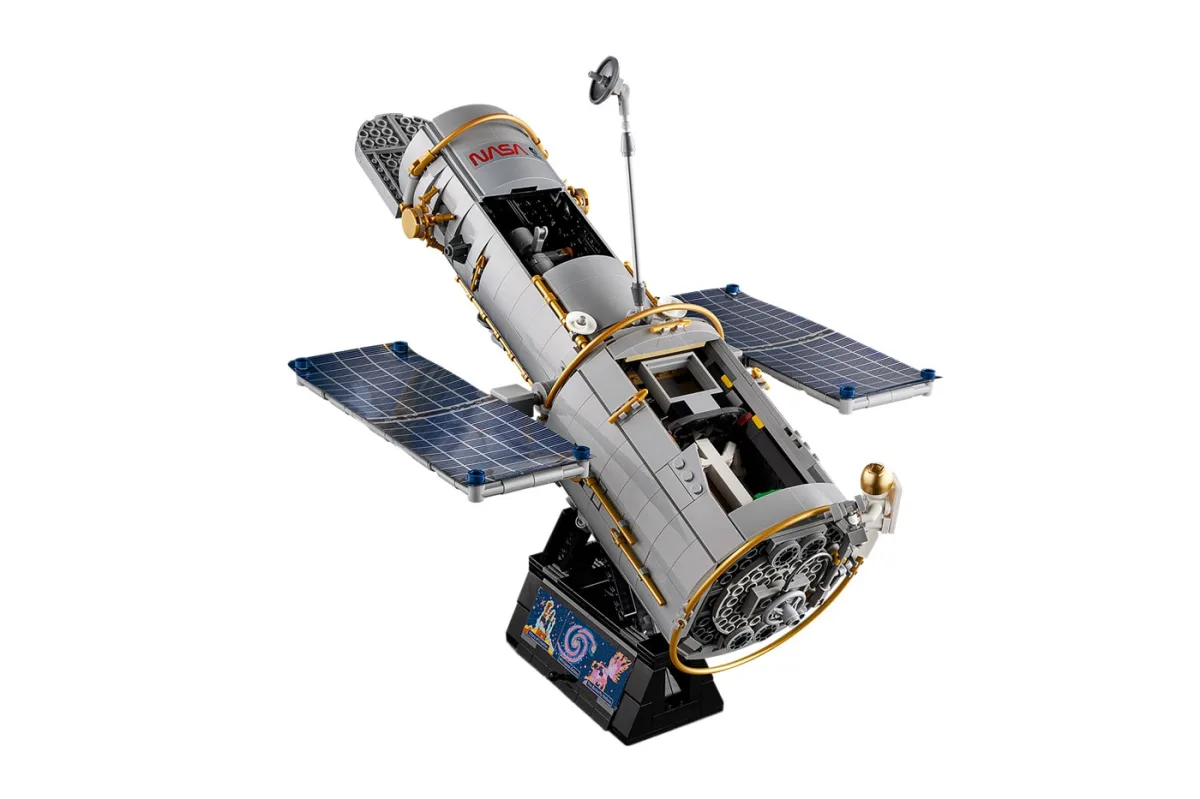
The key feature of the set is its removable exterior panels. They can be taken off to reveal the telescope’s internal structure.
Hidden beneath the outer shell is a detailed instrument bay featuring:
— gyroscopes;
— a mirror system;
— elements of the telescope’s optical core.
This means users are not simply getting a replica of a spacecraft, but an opportunity to see what exists inside a real orbital laboratory.
This approach is exactly what makes LEGO adult collector sets so special: they do not just decorate a space, they allow people to truly understand the history behind the object.
Details that real space enthusiasts will appreciate
The new model recreates almost all of Hubble’s iconic elements.
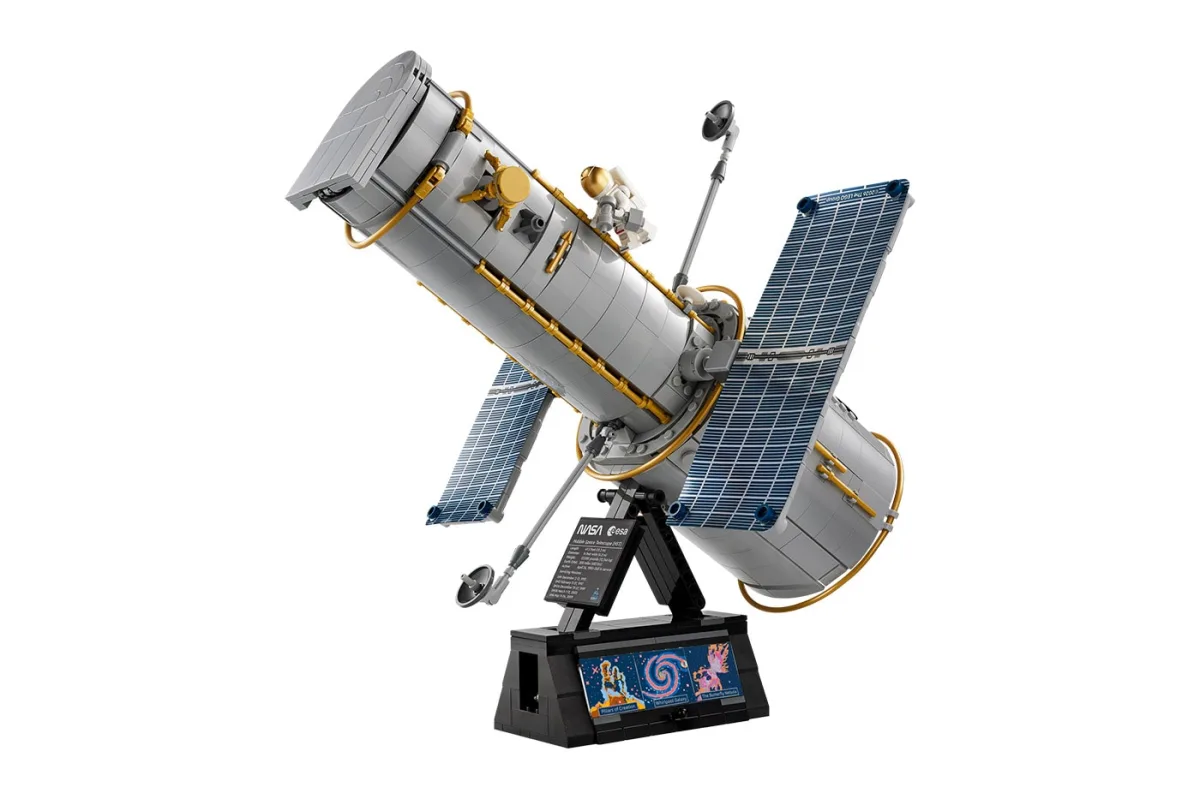
The solar panels on both sides of the telescope’s body can be adjusted, changing the appearance of the model. In real space, they provide energy from sunlight, while in the LEGO version they allow builders to create different display configurations.
The model also includes:
— movable antennas;
— an opening aperture door;
— a carefully recreated cylindrical body;
— a special display stand.
The stand features an information plaque, giving the model the appearance of a museum exhibit or a piece from a private collection.
The small astronaut minifigure adds another layer of meaning. It serves as a tribute to the people who traveled into space to repair and upgrade Hubble during five servicing missions.
Space that you can place on your shelf
The completed model measures over 32 cm in height, around 38 cm in length, and 38 cm in width with the aperture door open.
It was not created to remain inside a box. This is a display piece designed to take center stage in an office, on a desk, or in the collection of a true technology enthusiast.
LEGO Icons Hubble Space Telescope is much more than a simple set of bricks.
It is a reminder of the moment when humanity first gained the ability to see the Universe as it truly is.
The new set will be available from August 1 and will become one of LEGO’s most exciting space releases for adult collectors. For those who have always looked at the stars and wondered, “What lies beyond?” — now the answer can be built with their own hands.